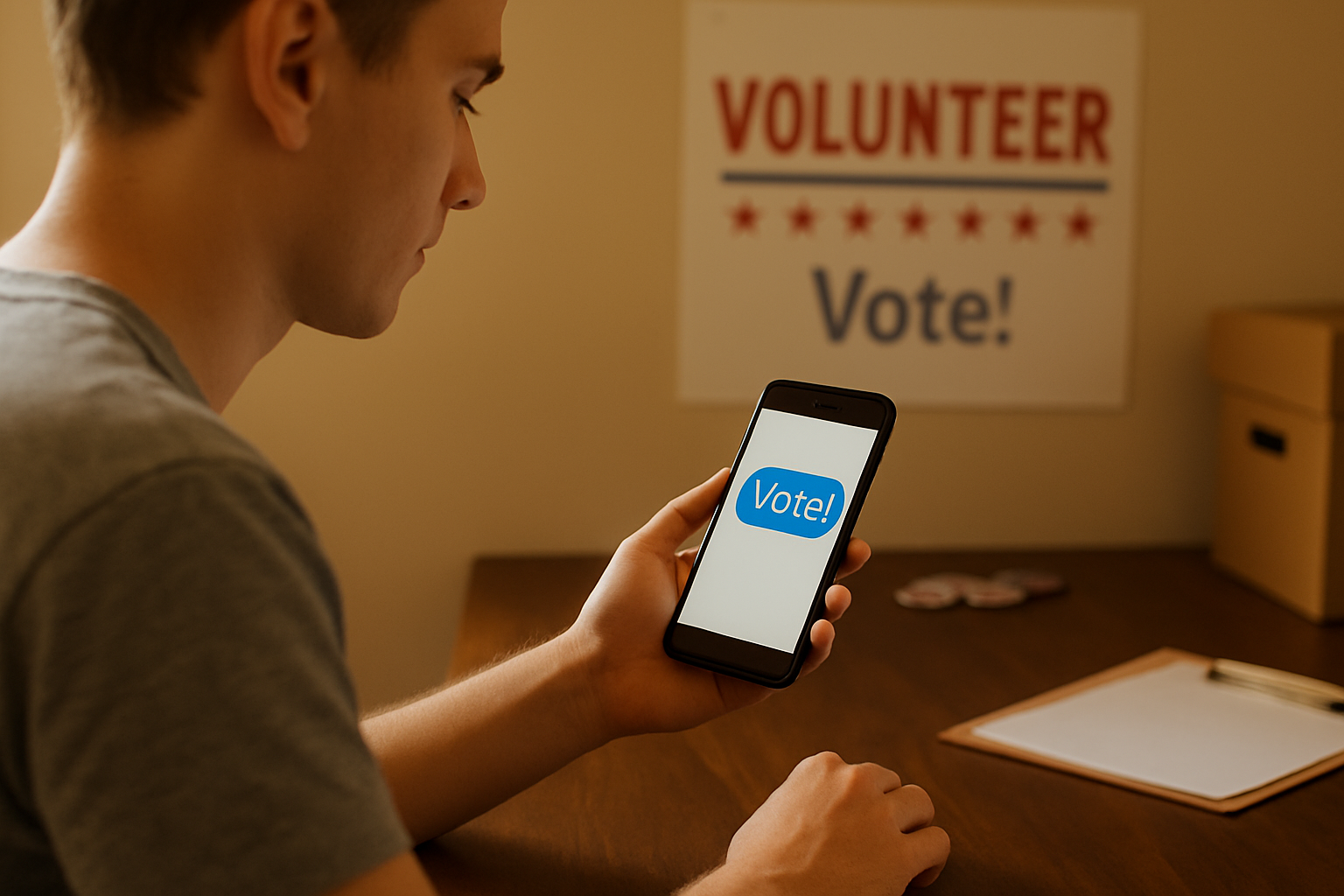
You’ve probably noticed how few voters pick up the phone these days. Emails get buried fast, but texts seldom do. According to CallHub, text messages have a 98% open rate, and most are read within three minutes.
That’s why campaigns rely on texting to raise funds, organize volunteers, and drive turnout. A political text messaging service helps make that process faster and more consistent.
In this article, we’ll cover how political texting works, what compliance involves, and how to build campaigns that reach the right voters.
Why Campaigns Trust Text Messaging to Reach Voters
Political texting works because voters actually read their messages. Almost everyone has a phone, and most text messages are opened within minutes. That kind of reach gives any campaign an immediate advantage.
Campaigns rely on texting for a few reasons:
- Instant reach: Political text messages go straight to voters’ mobile devices. They don’t sit in spam folders or get buried under social media posts.
- Direct contact: Peer-to-peer (P2P) texting lets staff and campaign volunteers have real conversations with potential voters. It helps answer questions, confirm support, and build familiarity with the candidate.
- Targeted outreach: Campaigns can sort contacts by zip codes, voting history, or interest level. That makes each campaign message feel personal and relevant.
- Proven results: Texting drives donations, boosts attendance at campaign events, and increases voter turnout on election day.
- Consistent delivery: With proper setup and attention to carrier regulations, every text is delivered successfully and stays compliant with all rules.
Texting gives campaigns a personal, reliable way to reach supporters, donors, and undecided voters on their mobile phones. It builds genuine connections and helps campaigns hit their goals faster.
What You Need to Know About Texting Compliance
Texting is one of the fastest ways to reach voters, but it comes with strict legal boundaries. Campaigns must follow federal and carrier requirements to keep every message legitimate and avoid penalties.
Understand the Legal Requirements for Texting
The Telephone Consumer Protection Act (TCPA) sets the foundation for texting compliance. It requires campaigns to get voter consent before sending any messages.
Without consent, one mistake can lead to heavy fines or carrier restrictions that block future outreach.
Protect Your Campaign From Fines and Suspensions
Ignoring compliance rules can be costly. The Federal Communications Commission (FCC) can fine campaigns between $500 and $1,500 per unwanted text.
Once you start sending messages at scale, those penalties add up quickly. Carriers can also suspend your number, cutting off your contact with voters.
Following the law isn’t just about avoiding penalties. It helps maintain voter trust.
When voters know your campaign respects their privacy, they’re more likely to stay engaged and respond to your campaign messages.
Earn Voter Confidence Through Transparency
Every message you send reflects your campaign’s values.
When voters see clear consent language and simple unsubscribe options, they know your campaign respects their time and privacy. That kind of transparency strengthens your credibility.
Compliance is about running a professional campaign that voters can trust. When you follow the rules and respect voter consent, you protect both your campaign and your candidate’s reputation.
Find the Right Number Type for Your Campaign Strategy
When selecting a number type for your campaign, 10DLC is the best option for local and community-focused outreach.
They appear as regular phone numbers and often include local area codes. That familiar look helps voters recognize your texts and feel more comfortable replying.
You can register a 10DLC number within a few days, and setup is affordable for most teams.
These numbers send 5-15 texts per second by default, so it’s important to monitor delivery and follow carrier regulations to stay compliant.
10DLC works well for P2P texting and personalized text messages aimed at smaller voter lists. Campaigns use it to share updates about events, registration reminders, or voting details.
It’s also effective for reaching potential voters one-on-one and building lasting trust through genuine communication.
How to Create a Winning Political Text Messaging Campaign
A well-structured texting plan helps your campaign reach voters quickly and drive measurable action. The key is to stay personal, precise, and compliant at every step.
Step #1: Build a Verified Opt-In List
Every political SMS campaign depends on voter consent. Ask supporters to text a keyword at events, on your website, or after phone calls with volunteers.
You can also gather sign-ups through social media or during canvassing. Include clear instructions that explain how to join and how to opt out.
Here’s an example:
“Text JOIN to 2024 for updates from [Candidate Name]. Reply STOP to unsubscribe.”
A verified list protects your campaign from compliance issues and helps you reach people who actually want to engage. It keeps your outreach efforts focused on voters who are interested in your message.
Step #2: Write Short and Action-Oriented Messages
Each message should sound natural and personal. Skip filler and write like you’re speaking to a friend. People ignore long blocks of text, so keep your political messaging short and direct.
Try something like this:
“Hi Sarah, polls open at 8 AM. Can we count on your vote for [Candidate Name]?”
That text does three things: it names the voter, includes key details about polling locations, and asks for a clear response. Messages like this encourage real engagement without feeling scripted.
Step #3: Personalize Every Outreach Effort
Personalized messages perform better than mass texts. Segment your audience by zip codes, engagement level, or interests. Mention local events or issues that matter to their community.
For example:
“Early voting begins today at the Community Center on Main Street. Your vote helps [Candidate Name] fight for safer neighborhoods.”
Texts sent from local area code numbers often feel more familiar and trustworthy. When messages sound like they come from someone nearby, recipients are more likely to respond.
Step #4: Schedule Texts at the Right Time
Timing influences how voters respond. Use message scheduling tools to send texts when people are available to read them. Afternoon and early evening hours usually work best.
Coordinate timing with campaign milestones. Send donation prompts as you near fundraising deadlines and reminders before polling locations open. Space messages evenly so voters don’t feel overwhelmed.
Step #5: Track Results and Adjust
Strong campaigns rely on feedback. Use your texting platform to collect data on replies, opt-outs, and engagement rates. Compare how different types of messages perform.
If reminders about events outperform donation appeals, shift your focus. If response rates drop, test a new tone or call to action. Keep refining until your outreach aligns with voter behavior.
Tracking also helps you identify potential donors or volunteers who interact often. A quick follow-up message after an event can strengthen those relationships.
Step #6: Train Your Team for Consistency
Your texting program is only as good as the people running it. Train your personnel texting team to follow compliance rules and maintain a consistent tone.
Everyone should know the campaign’s objectives and approved templates.
If you use P2P texting, train volunteers to reply to voter questions and share reliable information. They should also guide people to polling locations when needed.
Encourage them to keep interactions friendly and professional.
Training helps your campaign speak with one unified voice and keeps every final message compliant and effective.
Organize Election Campaign Messages Through Pulsar

A political campaign isn’t a one-person job. Between voter outreach, volunteer coordination, and field operations, every part of your team needs to stay connected.
You need a reliable political campaign software solution that helps win over voters before election day.
Pulsar is a voter contact platform built by campaign professionals with decades of experience.
The team includes former deputy directors, state directors, and data specialists who have managed races at every level.
A Complete Campaign Hub
Pulsar brings texting, canvassing, and phone banking together in one system. Your team can plan routes, assign work, and monitor voter contact activity without switching between programs.
Every interaction updates automatically, keeping your data accurate and ready for the next phase.
The platform also supports polling and modeled data for audience targeting. You can focus your election campaign messages on specific voter groups, follow up with undecided voters, and track engagement as it happens.
Built for Campaign Teams
More than 120,000 campaigns have used Pulsar to connect with over 100 million voters. The interface is simple enough for new users to learn quickly and reliable for experienced staff running large operations.
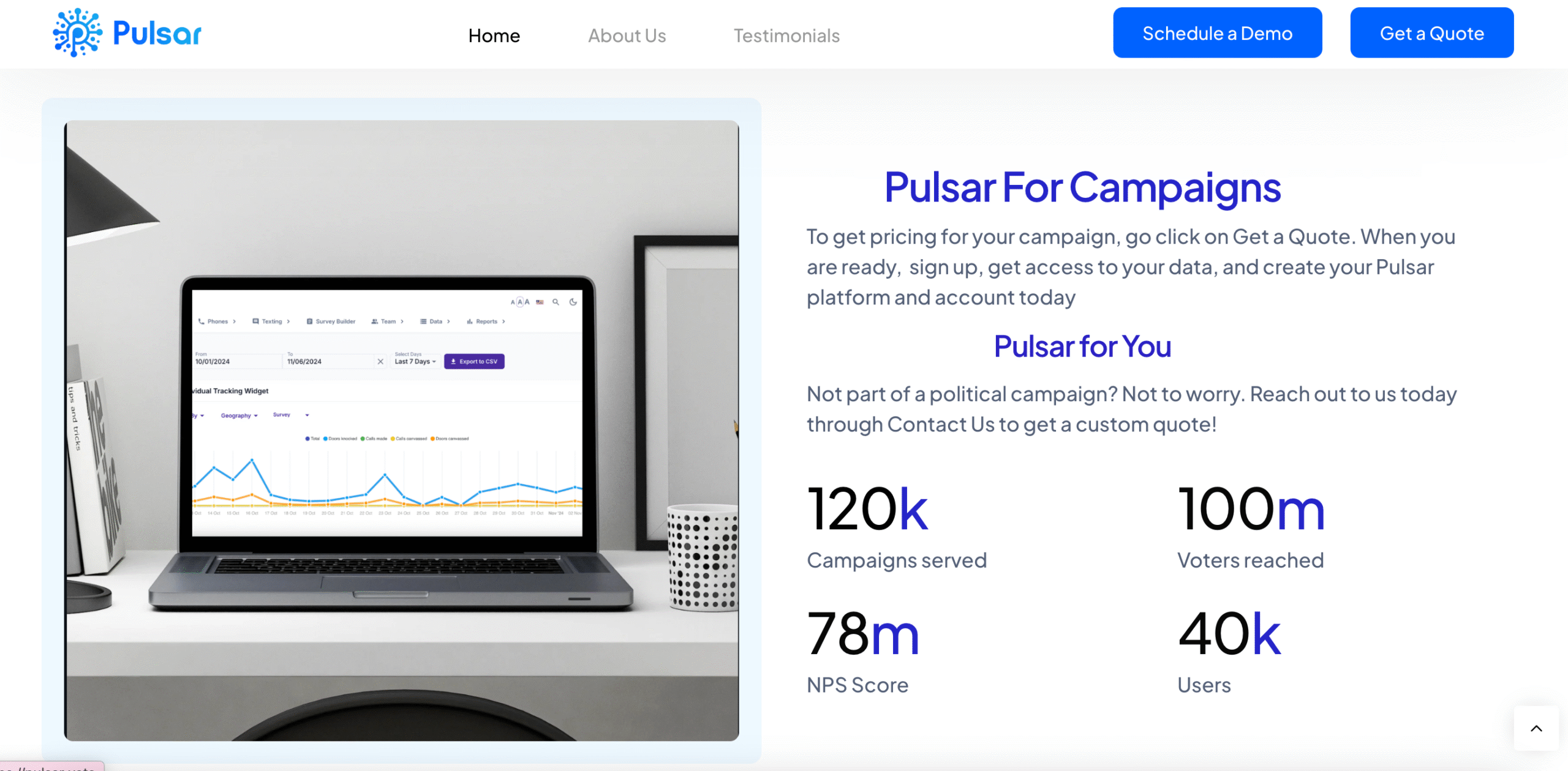
Field organizers can use map views, GPS tracking, and offline access to manage on-the-ground activity. Volunteers can send texts or make calls through the same platform.
Each person texting or calling updates the voter record automatically, keeping information complete and organized.
Flexible Plans and Experienced Support
Pulsar offers clear subscription options based on your state and race type. You can choose a plan that matches your campaign’s scope and add tools as your operation grows.
Setup takes only a few minutes. Once your account is active, your team gains access to voter data and can begin outreach immediately.
The support team understands the pace of campaign work. When you need help, you connect with professionals who know how to handle tight timelines and constant activity.
They respond quickly and help your campaign stay on track through every phase.
Get Started With Pulsar
Pulsar helps campaigns stay organized, communicate with voters, and send more messages that drive participation.
Request a demo or get a quote to see Pulsar in action. It’s the simplest way to keep your outreach organized, your team aligned, and your voter contact on track through election day!
FAQs About Political Text Messaging Service
What is a political text messaging service?
A political text messaging service helps campaigns reach voters quickly and consistently. It’s used to share updates, event details, fundraising messages, and voting reminders.
Campaigns use these tools to stay connected with supporters and keep communication organized throughout the election cycle.
How do political text campaigns help during elections?
They give campaigns a direct way to reach voters. Texts are short, personal, and often read within minutes. This helps campaigns boost turnout, promote early voting, and keep supporters engaged until polling day.
How can political parties use texting in their outreach?
Texting helps parties coordinate across multiple campaigns and promote shared goals. It also keeps voters informed about registration deadlines, events, and key updates.
Consistent communication helps voters stay involved and builds stronger engagement throughout the election season.