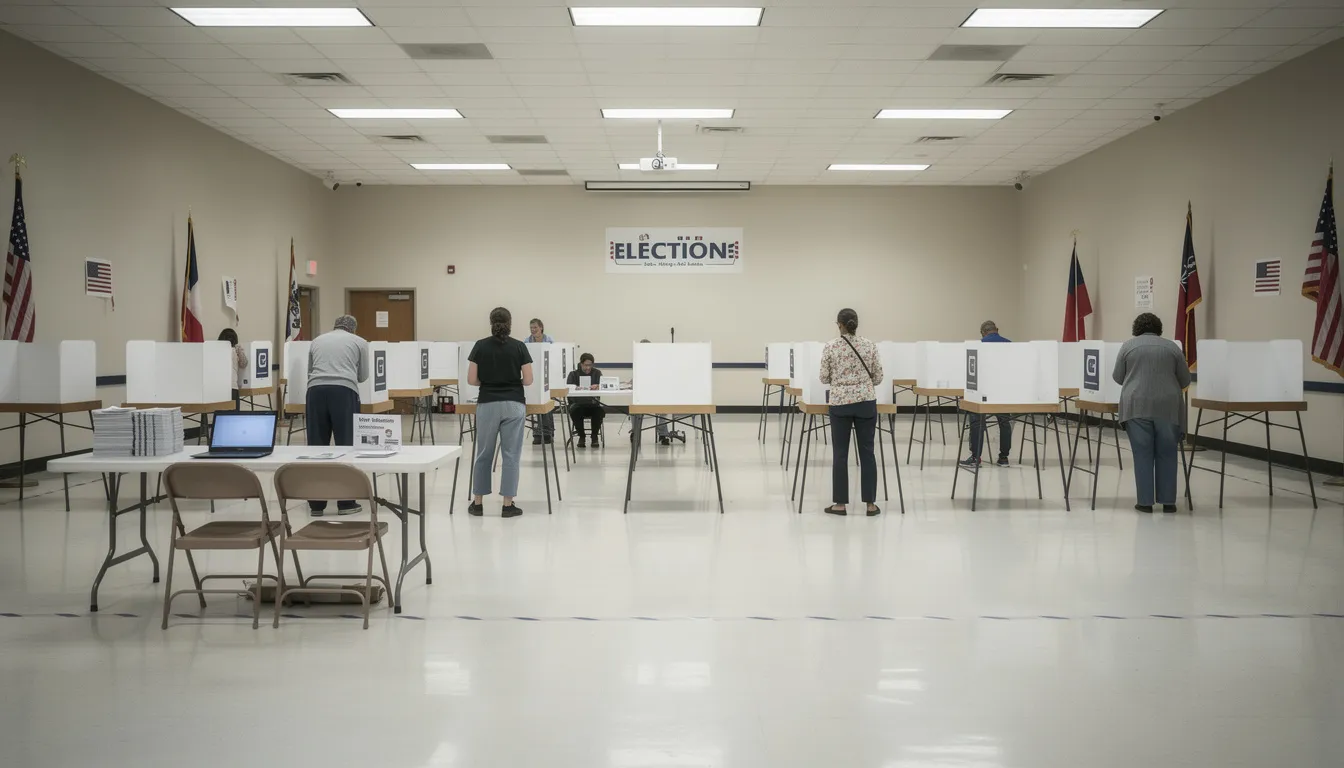
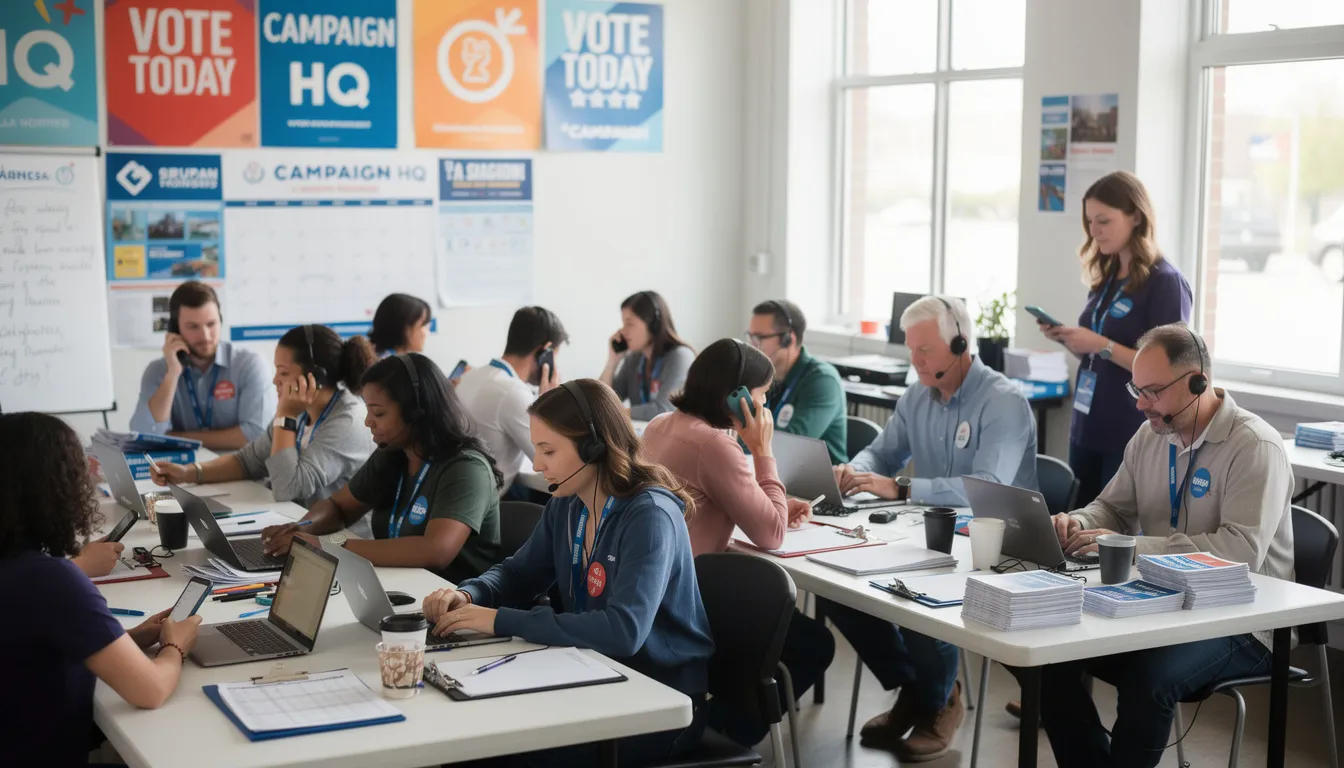
Key Takeaways
- Typical U.S. turnout hovers around 60–67% in presidential election years, drops to 40–50% in midterm elections, and often falls below 25% in many local elections and primary elections—creating fundamentally different electorates depending on when races are held.
- Low voter turnout magnifies the impact of field operations, micro-targeting, and GOTV efforts—small gains of even 2–5% among your supporters can flip outcomes in close races.
- When turnout drops, the remaining electorate skews older, wealthier, whiter, and more partisan, which can shape public policy and representation for years to come.
- Understanding these dynamics isn’t just political science theory—it’s essential strategic knowledge for campaign managers running races from city council to U.S. House.
- Pulsar’s voter contact system, political CRM, modeled data, texting, canvassing, and phone banking tools are built to give campaigns a decisive edge specifically in low-turnout environments.
Introduction: Why Low Voter Turnout Matters for Modern Campaigns
If you’re running a campaign in 2026, you already know that not every registered voter will show up on election day. But here’s what many campaigns miss: low turnout doesn’t just mean fewer voters—it means a fundamentally different electorate. The people who cast ballots in a low-salience municipal race look nothing like those who vote in presidential elections, and that difference shapes everything from your message to your GOTV strategy.
Consider the numbers. The 2020 presidential election saw roughly 67% of the voting eligible population turn out—the highest in modern american democracy. But drop down to midterm elections, and you’re looking at closer to 50%. Move to off-year municipal races, and turnout craters: Los Angeles’ 2022 primary drew around 29%, while New York City’s 2021 primary barely cleared 26%. For many local elections held across the country, turnout below 20% is the norm, not the exception.
This isn’t just a normative problem for those worried about a healthy democracy—though it certainly is that. For campaign professionals, low turnout is a strategic reality you must design around. The winners in these environments aren’t always the candidates with the best ideas or the most endorsements. They’re the ones who understand which voters will actually show up and how to reach them.
This article breaks down the main effects of low voter turnout on election results and public policy, and shows how campaigns can use tools like Pulsar to turn these dynamics into a competitive advantage.
Turnout Levels in the U.S.: How Low Is “Low” in Practice?
Before diving into strategy, let’s establish what we’re actually talking about. “Low voter turnout” is relative—what counts as low in a presidential race would be a record high in a school board election.
Presidential elections:
- U.S. turnout among the voting age population has typically ranged from 55–65% in modern elections
- The 2020 election peaked at approximately 67% of eligible voters—still below many other democracies
- Even in “high turnout” years, roughly one-third of Americans who could vote choose not to
Midterm elections:
- Turnout has historically ranged from 35–45% of eligible voters
- The 2018 midterm marked a notable high at around 50%
- The 2014 midterm hit a stark low of approximately 36%—meaning nearly two-thirds of eligible voters stayed home
Local elections:
- Mayoral and city council races in cities like Dallas, Charlotte, and Houston routinely draw turnout below 20%
- School board and special elections frequently see turnout under 10%
- Many primary elections for local offices see even lower electoral participation
International contrast: Countries with compulsory voting like Australia and Belgium regularly achieve turnout above 85–90% of registered voters. Even without mandatory voting, most OECD democracies average near 70%. The American system of voluntary voting, combined with voter registration requirements, creates turnout rates that are exceptional among developed nations—and not in a good way.
For campaign professionals, the practical takeaway is clear: many races you’ll run—primaries, off-cycle locals, special elections—are structurally low-turnout environments by design.
Who Votes When Turnout Is Low? The Shape of the Electorate Changes
Low voter turnout isn’t random. It systematically changes which groups hold power in any particular election. Understanding this demographic skew is essential for every campaign decision you make.
Age and income effects:
- Older voters (50+) dominate low-turnout elections while young people (18–29) drop off sharply
- Data shows youth voter participation stood at just 47% even in the 2024 presidential election—down from 2020’s historic 50%
- There’s a strong class bias to voting: those earning high incomes vote at much higher rates than those with low incomes
- Homeowners and higher-education residents consistently outperform renters and those without college degrees
Partisan and ideological skew:
- Highly engaged, strong partisans and ideological activists vote in low-salience elections at higher rates
- The share of base voters increases relative to independent voters and casual participants
- This is why primary elections often produce more ideologically extreme nominees than general electorates might prefer
Campaign strategy implications:
This is where tools like Pulsar become essential. When the electorate in your race doesn’t look like the general population, standard approaches fail. You need:
- List-building that identifies which low-propensity supporters are worth mobilizing
- Segmentation that separates habitual voters from occasional participants
- Modeling that predicts who will actually turn out in your specific race type
- Contact strategies tailored to different propensity levels
Pulsar’s preloaded voter files and political CRM allow campaigns to identify these patterns in their specific districts and build contact plans accordingly.
Direct Electoral Effects: How Low Turnout Changes Who Wins
Low turnout doesn’t just change the composition of the electorate—it directly alters who wins elections. In low-participation environments, margins shrink and small field advantages become decisive.
Consider the math. Many city council and school board races between 2010 and 2024 have been decided by fewer than 200 votes. State legislative primaries regularly hinge on margins under 100 votes. When total ballots cast number in the low thousands—or even hundreds—turning out an extra 2–5% of your likely supporters can flip control of a seat entirely.
Partisan impact varies by context: Research from political scientists suggests the partisan bias of low turnout is context-dependent. Sometimes it favors the republican party; sometimes Democrats benefit. But the consistent pattern is a bias toward groups that already vote at higher rates: older residents, wealthier communities, and areas with established political engagement.
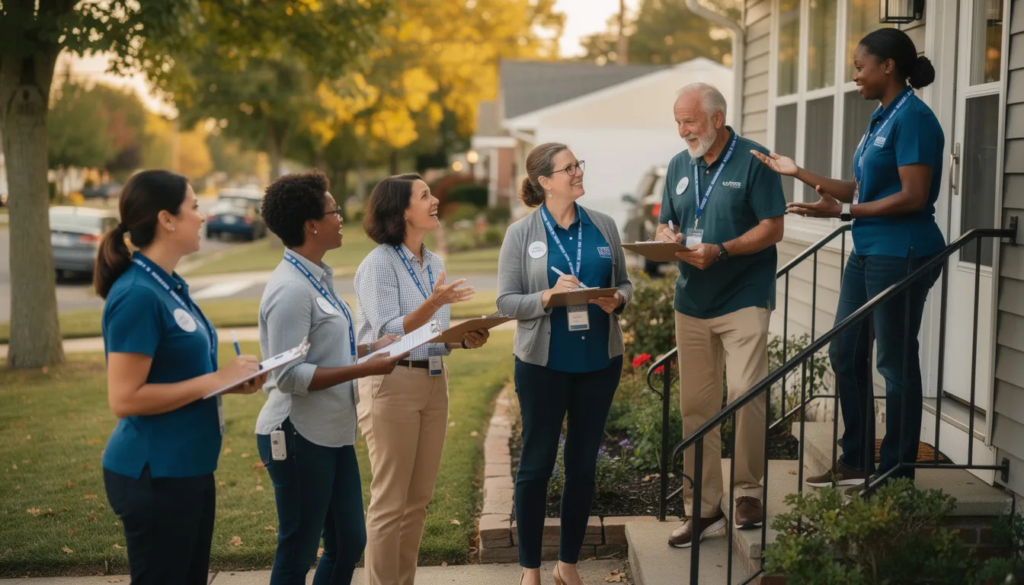
Field operations multiply in importance: In a presidential election, your canvassing program is one channel among many. In a low-turnout municipal race, it might be the channel that determines the outcome. A well-run GOTV program using texting, phone banking, and canvassing can produce measurable shifts that simply aren’t possible when millions of votes are being cast.
For example, imagine a 2026 off-year mayoral race where a campaign boosts turnout among 2018+2020 supporters in two key precincts by 4 percentage points through coordinated texting and door-knocking. That effort alone could swing a 300-vote margin in a race where the total vote might be 8,000.
In low-turnout contests, contact rate, follow-up cadence, and precise cutting of walk and phone lists are often more consequential than broad persuasion advertising. This is exactly what Pulsar’s canvassing and voter contact tools are designed to optimize.
Indirect Policy Effects: When Non Voters Disappear from the Agenda
Even when low turnout doesn’t flip the winner, it fundamentally changes whose preferences elected officials feel obligated to serve. This is the indirect effect that shapes governance for years after any particular election.
Elected officials know exactly who votes in primaries and local races. Those groups—typically older homeowners with higher socioeconomic status—get more responsiveness on issues like zoning, policing, school boundaries, and tax policy. The civil society groups that can mobilize voters in off-year elections hold outsized influence over public policy outcomes.
Local policy examples: Battles over housing density, public transit investments, school closures, and jail construction in recent decades have often reflected turnout disparities. When renters and younger residents don’t participate effectively in local elections, zoning decisions favor existing homeowners. When lower-income communities have depressed turnout, resources flow elsewhere.
Long-term strategic implications: Smart campaigns see low-turnout elections not just as one-off contests but as opportunities to build durable political participation among underrepresented groups. Every voter you mobilize in an off-year election is more likely to become a habitual voter in future cycles.
Maintaining a robust political CRM like Pulsar—tracking every contact, supporter commitment, and issue interest across cycles—helps campaigns and organizations systematically grow participation in communities that have historically stayed home. This isn’t just good for democracy; it’s good for building lasting electoral coalitions.
Campaign Challenges in Low-Turnout Elections
Running a campaign in a low-turnout environment creates distinct operational and strategic challenges that require different approaches than higher-salience races.
Uncertainty in the universe: Standard likely-voter models built off presidential-year voting behavior can misfire badly in odd-year municipal elections. If you’re using a model calibrated for 60% turnout to plan contacts in a 20% turnout race, you’re almost certainly reaching the wrong people. Many potential voters who “look” reliable based on past presidential participation won’t show up for a city council race.
Data and list problems: Campaigns often struggle with:
- Outdated voter files with incorrect addresses or deceased voters
- Irregular voters who participated once in 2020 but have no local voting history
- “Ghost” addresses and apartment turnover that makes canvassing inefficient
- Limited information about voter preferences in down-ballot races
This is where preloaded, regularly updated voter files—like those provided in Pulsar—mitigate risk. Having clean data from the start prevents wasted resources on contacts that will never convert.
Resource constraints: Many low-turnout races operate on smaller budgets. School board, city council, and county commission candidates don’t have the resources for extensive paid media. Every canvass shift, text program, or phone bank must be laser-focused on the most impactful targets. There’s no margin for error.
Volunteer and staff challenges: Motivating volunteers is harder when visibility is low and the race isn’t generating news coverage. Most voters aren’t paying attention, which makes early voting outreach and voter registration efforts feel less urgent to your team. Campaigns need tools that make volunteer onboarding, turf cutting, and progress reporting simple and tangible.
Turning Low Turnout into an Advantage: Strategies for Campaigns
While low turnout poses challenges for representative democracy, it creates strategic opportunities for campaigns that are organized, data-driven, and relentless about voter contact. The campaigns that win in low-turnout environments aren’t necessarily the best-funded—they’re the best-organized.
Strategic priorities for low-turnout races:
- Prioritize early identification: In high-turnout elections, you can rely somewhat on partisan patterns. In low-turnout races, you need to know exactly who your supporters are. Start voter ID work early and build comprehensive lists.
- Invest more in turnout than persuasion: When the electorate is small and partisan, converting undecided voters matters less than ensuring your identified supporters actually vote. Allocate resources accordingly.
- Segment ruthlessly: Separate your universe into high-propensity, medium-propensity, and low-propensity supporters. Design different contact plans and scripts for each group:
- High-propensity supporters: Light touches, reminders, ballot chase
- Medium-propensity: Multiple contacts, voting logistics support, accountability asks
- Low-propensity: Heavy investment if they’re genuine supporters, or deprioritize entirely
- Lean into high-touch channels: Door-knocking, live phone calls, and personalized SMS have outsized impact in low-turnout environments compared to generic broadcast messaging. The democratic process often comes down to personal connections.
- Build accountability systems: Track who you’ve contacted, what they committed to, and follow up relentlessly. In a race decided by 150 votes, letting 50 committed supporters slip through the cracks is unacceptable.
Example scenario: Consider a 2025 off-year mayoral race where total turnout is expected around 22% of registered voters. A campaign identifies 4,000 likely supporters across the city but knows that without intervention, only 2,400 will actually vote. By implementing a coordinated texting and canvassing program focused on the 1,600 medium-propensity supporters—reminding them of early voting options, offering rides to polling locations, and making personal asks—the campaign converts 400 additional votes. In a race with 15,000 total ballots, that margin could be decisive.
How Pulsar Helps Campaigns Win in Low-Turnout Elections
Pulsar is built for exactly the kinds of races where turnout is low and every contact matters. More than 120,000 campaigns have used the platform because it solves the specific challenges that campaign managers face in competitive environments.
Preloaded voter files: Pulsar provides preloaded, up-to-date voter files by state and race type. Whether you’re running for city council or U.S. Senate, you can quickly identify your likely voter universe in municipal, county, state legislative, and national elections without building infrastructure from scratch. Clean data from day one means fewer wasted contacts.
Political CRM capabilities: Pulsar’s CRM centralizes supporter data, contact history, tags, and issue preferences. You can track:
- Which low-propensity voters have been contacted
- What they committed to
- Who still needs follow-up
- How many touches each voter has received
This is critical in low-turnout races where your voting rights to win depend on systematic, relentless follow-up.
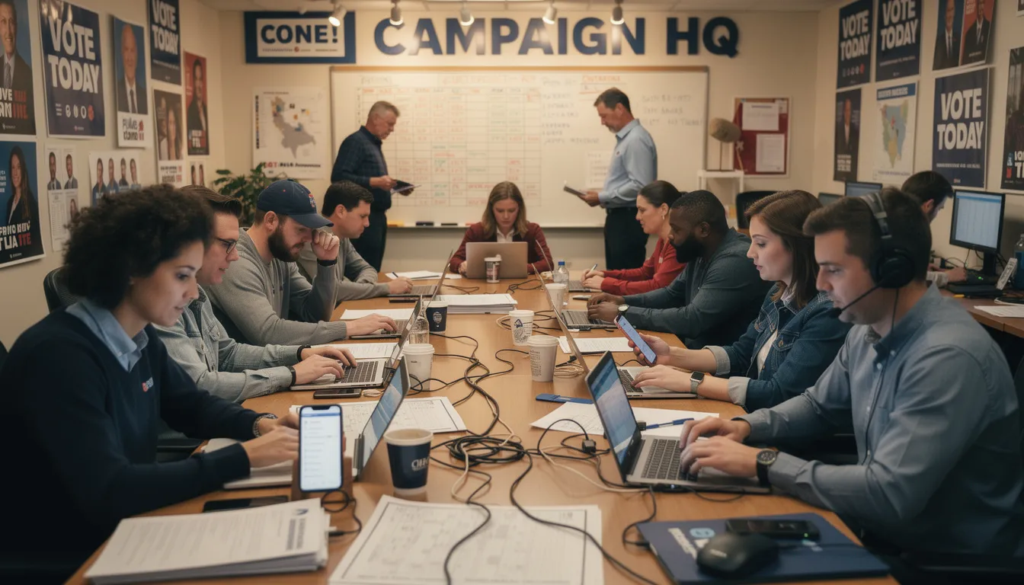
Integrated outreach tools: Pulsar brings canvassing, phone banking, and political texting together in one platform:
Tool | Function | Low-Turnout Application |
Canvassing | Door-to-door voter contact with mobile-optimized apps | Cut efficient turfs, track real-time results, adjust GOTV plans daily |
Phone banking | Manual and predictive dialer programs | Personal calls to medium-propensity supporters in final weeks |
Texting | Targeted SMS campaigns | 72-hour election day reminders, early voting pushes, ballot chase |
Volunteer management: Pulsar’s tools allow campaigns to:
- Assign volunteers to specific neighborhoods
- Track their progress in real time
- Immediately ingest data from doors and calls
- Adjust GOTV plans based on what you’re learning
In low-turnout races, where your volunteer capacity might be your biggest constraint, efficient volunteer management isn’t a nice-to-have—it’s essential.
Ready to see how Pulsar can help you win your next low-turnout race? Schedule a demo or request a quote to get started.
Building Long-Term Power in Historically Low-Turnout Communities
Smart campaigns think beyond a single cycle. The same infrastructure you use to win one low-turnout election can be reused to grow political participation across years, building durable power in communities that have historically been underrepresented.
List continuity: Keeping a clean, well-tagged database of contacts in Pulsar—supporters, volunteers, donors, and persuadables—lets campaigns and organizations re-engage the same people across school board, city, and state races. The voter ID work you do for a city council race becomes the foundation for a state house district campaign two years later.
Habit formation: Research from political psychology confirms that voting is habit-forming. If a campaign can get a low-propensity supporter to vote in an off-year or local election once, they’re significantly more likely to show up again in future cycles. Over a century of democratic practice has shown that increasing participation requires persistent engagement, not one-time mobilization.
Coalition building: Working with aligned organizations, local advocacy groups, and party committees—using shared data and coordinated outreach where legally permitted—can steadily lift turnout rates in underrepresented neighborhoods. The voting rights act and subsequent electoral rules have created frameworks for this kind of systematic engagement.
Because Pulsar is used by campaigns at every level, it’s well-suited for committees and organizations that want to run consistent, data-driven engagement programs across multiple cycles—building the kind of voter contact infrastructure that transforms turnout problem areas into reliable bases of support.
FAQ: Campaign Questions About Low Voter Turnout
How low does turnout have to be before it meaningfully changes campaign strategy?
Once turnout dips significantly below presidential-year levels—under approximately 40–45% of eligible voters in general elections, or under 25% in local and primary contests—the composition of the electorate shifts enough that campaigns should treat it as a fundamentally different universe. Standard assumptions about voting behavior, partisan splits, and persuadable voters no longer hold.
In these conditions, campaigns should lean heavily on voter file analysis, modeled turnout scores, and past off-year data to define their “true” likely voter pool. Tools like Pulsar make this analysis accessible even for smaller campaigns without dedicated data staff.
Is it better to focus on persuasion or turnout in low-participation elections?
In many low-turnout contests—especially primaries and off-year locals—the more cost-effective path is often to prioritize turning out identified supporters rather than broad persuasion of uncommitted other voters.
The recommended hybrid approach: use Pulsar to ID and categorize voters (supporters, leaners, undecideds), then allocate more field resources to GOTV among supporters and targeted persuasion only among a narrow universe of genuinely persuadable voters. In a race where 500 people might decide the outcome, spending resources persuading confirmed opponents is waste you can’t afford.
How early should a campaign start building its turnout operation for a low-salience race?
Start serious voter ID and data infrastructure work at least 4–6 months before election day for city, county, or state legislative races, and even earlier for competitive congressional or mayoral contests. The campaigns that scramble to build voter contact programs in the final month almost always underperform.
Using Pulsar from the outset—loading voter files, setting up tags and segments, and integrating volunteer workflows—reduces last-minute chaos and allows for a well-planned GOTV push in the final 30 days when it matters most.
Can small campaigns with limited budgets still benefit from data-driven turnout tools?
Absolutely—and in many cases, down-ballot races with modest budgets benefit the most. Efficient targeting prevents waste on low-impact universes and channels, which is exactly what resource-constrained campaigns need.
Pulsar offers race-level plans and state-based subscriptions, enabling school board, city council, and county commission campaigns to access professional-grade voter contact tools without enterprise-level contracts. When your entire campaign budget might be what a congressional race spends on mail in ballots, making every dollar count through better targeting is essential.
How do we measure success in a low-turnout election beyond just winning or losing?
Winning obviously matters, but campaigns should also track intermediate metrics that indicate whether their strategy worked:
- Contact rate among targeted universes
- IDs collected and supporter conversion rate
- Turnout lift in priority precincts compared to past cycles
- Volunteer efficiency (contacts per hour, shifts completed)
- Early voting utilization among your supporters
With Pulsar, campaigns can pull post-election reports comparing targeted universes to actual turnout, assessing where outreach measurably increased participation. This data is invaluable for the major parties, consultants running multiple races, and organizations building long-term power—even in precincts where you didn’t win the overall vote.