Political Campaign Checklist: From First Decision to Election Day
Key Takeaways
- Start formal planning 9–12 months before Election Day whenever possible, even for local races—strong campaigns are built quietly during this viability and research phase.
- Using an integrated political CRM and voter contact platform like Pulsar is essential for managing voter data, outreach, volunteers, and compliance at scale.
- This checklist is divided into clear phases: pre-campaign viability and research, legal setup and compliance, message and brand, fundraising, voter contact, GOTV, and post-election wrap-up.
- The same core steps apply from city council through U.S. House or statewide races—adjust timelines and scale, not the fundamental process.
- A calculated win number, consistent branding, and systematic voter contact are non-negotiables for any successful political campaign.
Running a political campaign without a checklist is like building a house without blueprints. You might get something standing, but the foundation will crack under pressure.
This practical, chronological checklist is designed for U.S. campaigns in the 2026–2028 cycle, aimed at candidates and campaign managers who want to move from announcement to victory with a clear plan. Whether you’re a first-time candidate for city council or a campaign manager taking on a competitive congressional race, these key steps will keep your operation on track.
Let’s walk through exactly what needs to happen—and when.
- Pre-Campaign Viability & Research (9–12 Months Before Election Day)
This phase happens before any public announcement. Many of the strongest campaigns are quietly built during this period, with candidates and their inner circles doing the homework that separates serious contenders from symbolic runs.
For a November general election, this phase typically starts the previous November through January. For example, if you’re targeting November 3, 2026, begin no later than January 2026—preferably earlier.
Research Filing Deadlines and Election Rules
Start by pulling the 2026 candidate handbook from your Secretary of State and local election board. Document:
- Filing deadlines and ballot access requirements
- Signature thresholds for petition-based access
- Contribution limits for individuals, PACs, and party committees
- Campaign finance laws specific to your jurisdiction
- Registration process for campaign committees
Analyze the Political Landscape
Pull precinct-level results from the last 2–3 election cycles (2020, 2022, 2024) for the same office or similar offices. You’re looking for:
- Historical voter turnout rates by precinct
- Partisan lean and swing patterns
- Performance of similar candidates (incumbents vs. challengers, party vs. party)
- Registered voters totals and trends
Map Major Stakeholders
Before going public, identify who matters in your district:
Stakeholder Type | Examples | Why They Matter |
Party Committees | County/state party chairs | Endorsements, volunteer networks |
Advocacy Groups | Environmental, labor, business associations | Issue credibility, mobilization |
Community Leaders | Neighborhood association presidents, faith leaders | Local validation |
Media Outlets | Local papers, radio, digital news | Earned coverage |
Conduct a Candidate Self-Assessment
Be honest. Capture this in a short internal memo:
- Relevant experience and credentials
- Known vulnerabilities (voting record, social media history, personal issues)
- Realistic time availability for campaign activities
- Existing fundraising network and relationships
- Family and employer support
Research Demographics and Voter Data
Use public data and modeled data available through platforms like Pulsar to understand:
- Age, race, income, and education distributions
- Voter registration trends
- Issue priorities by community segment
Output from this phase: A 2–3 page viability summary answering the core question—can you actually win this race?

- Legal, Compliance & Campaign Infrastructure Setup
No fundraising or major spending should occur before confirming legal requirements and completing basic setup. Cutting corners here has disqualified candidates in up to 5% of local races per election cycle.
Form the Campaign Committee
Register with the appropriate election authority:
- FEC for federal races (U.S. House, U.S. Senate)
- State board of elections for state legislative and statewide races
- County or municipal election boards for local races
Obtain all required committee IDs and confirm registration is complete.
Financial Infrastructure
- Obtain an EIN from the IRS
- Open a dedicated campaign bank account with clear internal controls
- Designate authorized signers (typically campaign manager and treasurer)
- Set up a basic compliance system to track contributions, expenditures, and reporting deadlines
Document Contribution Policies
Create written policies for:
- Individual contribution limits per jurisdiction
- Prohibition on corporate checks (where applicable)
- Online donation disclaimers and compliance text
- Process for returning excess or prohibited contributions
Insurance and Legal Counsel
- Secure general liability insurance for campaign events
- Obtain workers’ compensation for paid campaign staff
- Consider cyber coverage for data-heavy operations
- Identify a campaign finance attorney on call, especially for federal or competitive statewide races
Digital Infrastructure Setup
Set up your core tech stack now:
Element | Purpose |
Campaign domain | Official web presence |
Official email addresses | Professional communication |
Cloud file storage | Secure document access |
Password management | Access-controlled credentials |
Political CRM | Voter, volunteer, and donor management |
This is the moment to choose your core technology platform. Pulsar can serve as an all-in-one solution for voter files, canvassing, texting, phone banking, and outreach tracking—eliminating the need to stitch together multiple tools.
- Core Strategy: Path to Victory, Target Voters & Data Plan
This section converts earlier research into a concrete “math to win” campaign strategy, grounded in real turnout numbers and voter universes. Without this, you’re spending resources without knowing if they’re moving you toward victory.
Calculate Your Win Number
Use recent turnout data to project your target:
If 30,000 voters turned out in 2022 for this office and turnout is projected 10% higher in 2026, estimate ~33,000 total votes. Target 50% + 1 = approximately 16,501 votes needed to win.
This win number becomes the foundation for every resource allocation decision.
Define Key Voter Segments
Using voter file data and modeled scores (available through tools like Pulsar), segment your universe:
- Strong supporters: High-propensity voters already with you—focus on turnout
- Leaners: Favorable but need reinforcement
- Persuadable voters (swing voters): Undecided or soft opponents—your persuasion targets
- Unlikely supporters: Don’t waste resources here
Build a Clean, Centralized Voter Database
Early investment in data quality pays dividends. Your political CRM should include:
- Preloaded state voter files
- Custom imports from canvassing and events
- Constant deduplication and hygiene
- Integration with all contact tools
Map Geography to Strategy
Identify:
- Priority precincts and wards with high persuadable populations
- Swing neighborhoods where small margins decide outcomes
- Base precincts where turnout boosting is most efficient
Set Strategic Priorities
Based on district composition and campaign funding reality, decide your emphasis:
Strategy | Best For |
Base turnout focus | Safe districts where your party’s voters just need motivation |
Persuasion heavy | Competitive districts with large undecided populations |
Field-intensive | Lower-budget races where volunteer contact beats paid media |
Media-heavy | Larger districts where scale requires broadcast reach |
Example: A 2026 city council race where 70% of resources go to door-to-door canvassing and texting in 15 key precincts, with 30% on targeted digital and mail to persuadable voters.
Outputs from this phase:
- Win-number memo
- Target voter universe description
- Basic field and communications strategy outline stored in your shared drive
- Message, Brand & Candidate Readiness
A compelling message, consistent branding, and prepared candidate are prerequisites before major public launch or large-scale outreach. Vague platforms reduce voter trust by 15–20% according to polling data.
Draft Your Core Message
Create a 2–3 sentence statement explaining:
- Who the candidate is
- What they stand for
- How they’re different from the status quo or main opponent
This is your campaign message that will echo across all materials and channels.
Develop a Memorable Slogan
Your slogan should:
- Be short enough for yard signs and social headers
- Tie directly to your core message
- Appear on all campaign materials (website, texting templates, canvassing literature)
Create Candidate Biography Versions
Version | Length | Use Case |
Long form | 400–600 words | Campaign website, press kits |
Short form | 150–200 words | Literature, introductions |
One-liner | 25–30 words | Social bios, quick intros |
Edit all versions for consistency and tone.
Build Your Visual Brand
Maintain consistent branding across all touchpoints:
- Logo
- Color palette
- Typography
- Photography style
- Design guidelines for digital ads and print media
Prepare the Candidate
- Media training with mock interviews
- Stump speech rehearsal (limit to five core talking points)
- Clear guidance on handling tough questions about past votes, social media posts, or personal history
- Prepared written statements and opponent’s position responses
Clean Up Digital Footprint
Before launch:
- Review and archive old posts
- Update dormant accounts or close them
- Ensure the same message appears across major platforms
Integration note: Tailor your talking points to key issues surfaced in polling, canvassing, and modeled issue data from your political CRM.
- Fundraising & Budget Management
Realistic budgeting and sustained campaign fundraising are often the difference between a serious campaign and a symbolic one. Data shows campaigns hitting 80% of fundraising targets win 70% more often.
Build a Detailed Budget
Create line items by month from launch through 30 days after Election Day:
Category | Typical % of Budget |
Staff salaries | 25–35% |
Field operations | 15–25% |
Digital ads | 15–20% |
10–15% | |
Fundraising events | 5–10% |
Technology/CRM | 3–5% |
Compliance/legal | 2–5% |
Reserve (contingency) | 10–15% |
Set Fundraising Targets
Your fundraising plan should include:
- Top-line goal based on budget plus 10–15% contingency buffer
- Weekly or monthly targets broken down by source
- Early benchmark: raise 20–30% of total budget before public launch
Create Your Initial Call List
Your first campaign funding comes from:
- Personal contacts (friends and family)
- Professional networks
- Previous donors (where applicable)
Aim to raise the first 10–20% of your goal quickly to fund initial polling and campaign materials.
Segment Donor Prospects
Segment | Target | Approach |
High-dollar hosts | $1,000+ | House parties, personal calls |
Max-out donors | Legal maximum | Direct candidate asks |
Small-dollar online | $5–$100 | Email, SMS appeals |
Institutional (PACs, unions) | Varies | Questionnaires, endorsement interviews |
Integrate Online Fundraising Tools
Connect WinRed or equivalent platforms with your political CRM so every donation automatically updates donor history and contact information.
Recurring Fundraising Activities
- Call time: Candidate dedicates 2–4 hours daily to potential donors
- Email/SMS fundraising: Regular appeals tied to campaign milestones
- Fundraising events: Virtual and in-person
- Peer-to-peer outreach: Supporters reaching their networks to collect donations
Maintain Compliance
Track:
- Aggregate contributions per donor
- Required disclaimers on all solicitations
- Timely filing of finance reports with relevant authorities
Example quarterly calendar for a state legislative race:
Month | Focus |
Q1 | Launch event, friends/family calls, first online push |
Q2 | Two house parties, first PAC outreach, mid-year report |
Q3 | Major fundraising push before fall, second event cycle |
Q4 | Final push emails, GOTV funding, post-election close-out |
- Building the Team & Volunteer Program
Even small races need defined roles. The structure should scale with the size and competitiveness of the race, but the fundamentals remain constant.
Define Core Campaign Staff Positions
Role | Responsibility | Notes |
Campaign Manager | Overall strategy and operations | Often combined with field for small races |
Finance Director | Fundraising, donor relations, compliance | Critical from day one |
Field Director | Voter contact, volunteer management | Combines with campaign manager in lean operations |
Communications/Digital Lead | Message, press releases, social media, paid ads | Can be part-time or consultant |
Data/Operations | CRM management, targeting, analytics | Often shared with field |
For smaller campaigns, combine roles as needed—but never leave a role ownerless.
Create Written Role Descriptions
Even for volunteer positions, document:
- Responsibilities and deliverables
- Reporting lines
- Time commitments
- Access levels in campaign systems
Establish Your Central CRM
From day one, use a political CRM like Pulsar as your “source of truth” for:
- Voters
- Volunteers
- Donors
- Events
Configure permission controls so team members access only what they need.
Recruit Volunteers
Build your campaign volunteers base through:
- Early supporter lists
- Local party organizations
- Campus groups
- Community organizations and community meetings
Capture all signups in your central platform immediately.
Volunteer Onboarding
Create:
- Orientation materials explaining the campaign plan
- Basic handbook with code of conduct
- Short trainings for canvassing, phone banking, and texting
- Clear first assignments to maintain engagement
Maintain Regular Communication
- Weekly emails with updates and shift reminders
- SMS reminders for upcoming events
- Standard schedule of volunteer shifts
- Recognition for top performers
Staffing comparison example:
Position | Competitive U.S. House (2026) | City Council (2026) |
Paid staff | 8–15 | 0–2 |
Campaign manager | Full-time, senior | Part-time or lead volunteer |
Field staff | 3–5 regional organizers | Manager handles directly |
Volunteer target | 200–500 active | 20–50 active |
- Digital Presence, Website & Campaign Materials
For most voters in 2026–2028, their first interaction with a new candidate will be online—not at the doorstep. Your digital presence must be ready before you start significant outreach.
Launch Your Campaign Website
Essential pages:
- Home (clear message, immediate calls to action)
- Biography
- Issues (top 3–5 major issues with your positions)
- Volunteer signup
- Events calendar
- Donate (with compliance disclaimers)
- Contact
- Legal disclaimers (paid for by, privacy policy)
All forms should integrate with your political CRM so supporter and donor records update automatically.
Set Up Social Media Channels
Establish official accounts on:
- X/Twitter
- TikTok (for younger target audience)
- LinkedIn (for professional networks)
Use consistent imagery, bios, and links back to your campaign website across all platforms.
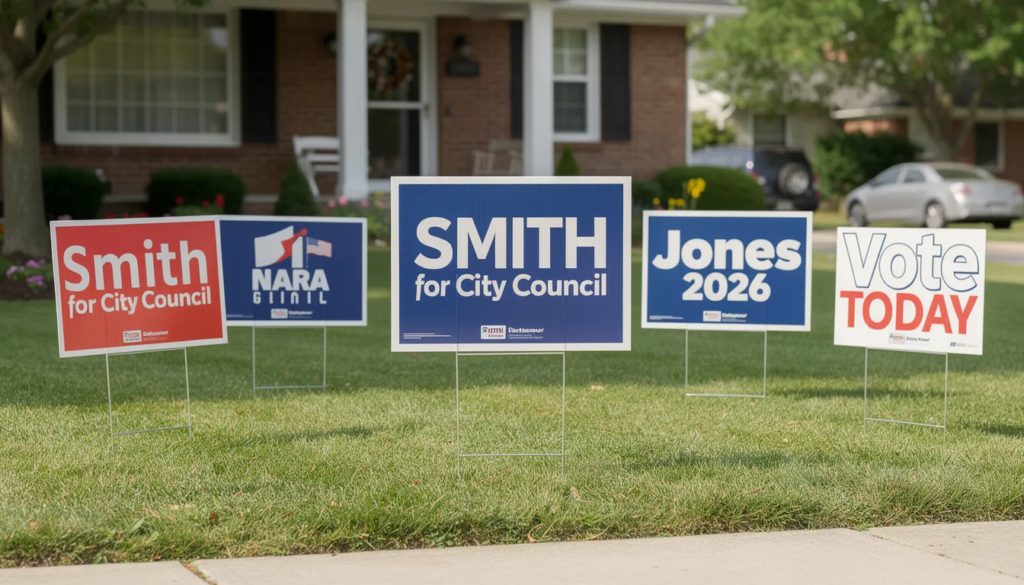
Create Initial Campaign Materials
Your creative assets should maintain consistent branding:
- Yard signs
- Palm cards and walk pieces
- Business cards
- Banners for events
- Digital ad templates
Budget 5–10% of total spend on materials. Research shows yard signs increase name recognition by 10–15%.
Build a Content Calendar
Align organic posts, email newsletters, and text broadcasts with:
- Filing deadlines
- Campaign launch
- Debates and public events
- Early voting periods
- Election day
Configure Analytics and Tracking
Set up:
- Website analytics (Google Analytics or equivalent)
- Conversion tracking for online ads
- Reporting dashboards in your CRM to measure signups, donations, and volunteer activity
Design everything mobile-first. Most voters will interact with your campaign on their phones.
- Voter Contact & Field Operations
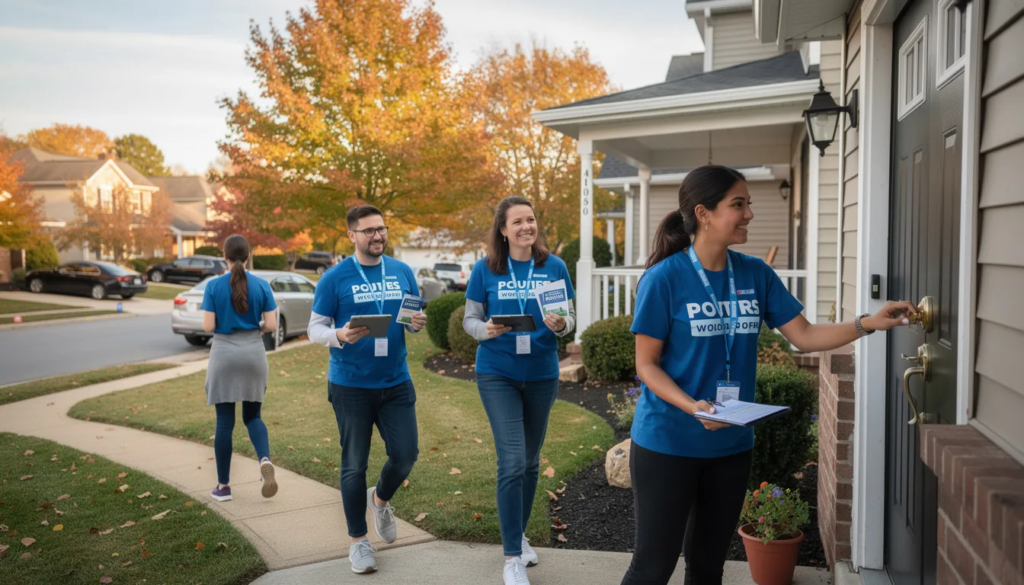
This is the heart of your campaign: systematic contact with target voters through canvassing, phone banking, texting, mail, and organize events. Integrated voter contact plans boost voter turnout 8–12% over siloed efforts.
Build a Field Plan Tied to Your Win Number
Calculate:
- How many conversations are needed with which voter segments
- Timeline to hit persuasion and turnout goals
- Contact rates: aim for 3–5 touches per high-priority voter
Design Scripts That Capture Data
Every conversation—at doors, on phones, via text messages—should capture:
- Support level (1–5 scale)
- Top issue
- Volunteer interest
- Email and cell phone
- Any specific concerns or requests
Store all data in your CRM or a platform like Pulsar.
Use Preloaded Voter Files and Walk Lists
Your voter list should power efficient field operations:
- Turf cutting and offline mapping tools
- Assigned routes for canvassers
- Real-time completion tracking
- Automatic syncing between field and headquarters
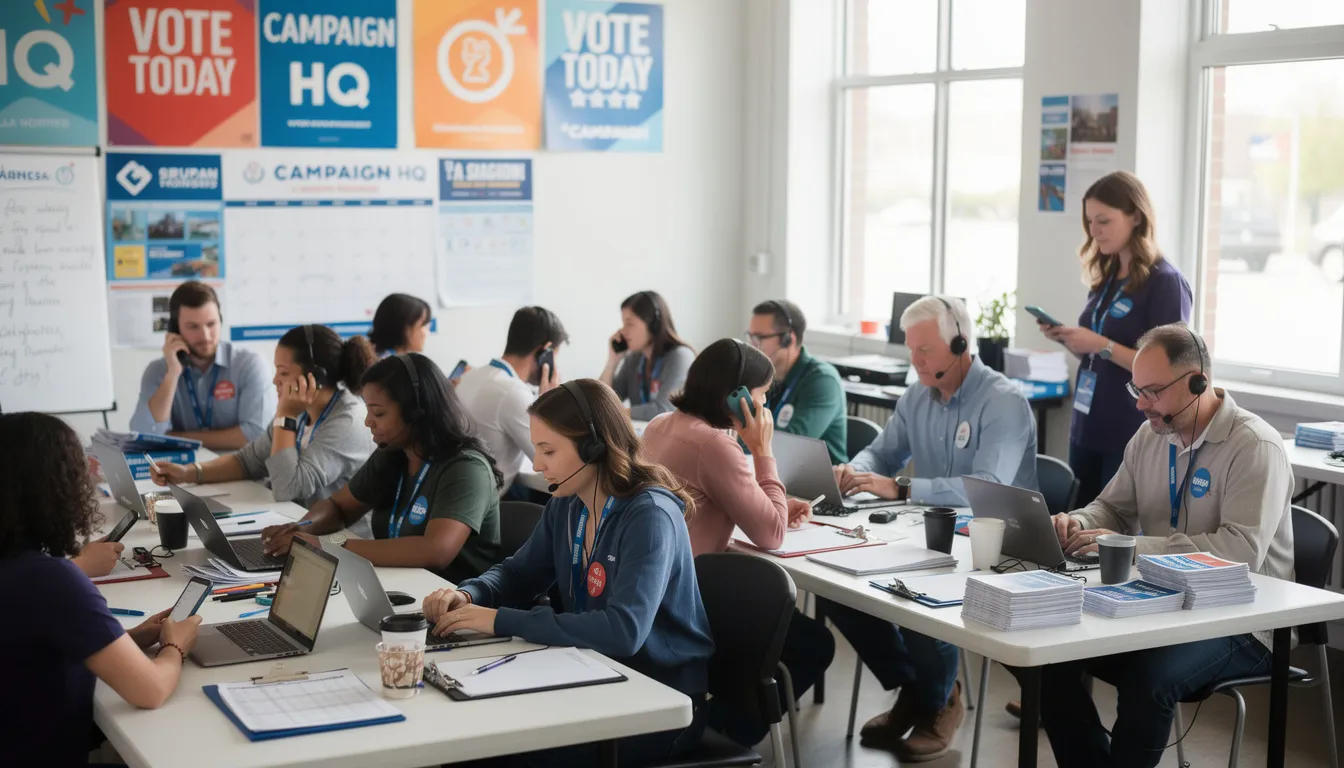
Set Up Phone Banks and Text Banks
Element | Recommendation |
Format | Virtual and in-person options |
Training | 15–30 minute session before each shift |
Schedules | Published weekly, 2-hour shifts minimum |
Goals | Calls per hour, texts per shift |
Coordinate Across Different Channels
Reinforce the same campaign message across:
- Door-to-door canvassing
- Phone calls and texting
- Direct mail
- Digital and paid ads
- Community meetings
Your target audience should hear the same message multiple times through multiple channels.
Use Modeled Data for Prioritization
Where available through Pulsar or similar tools, use:
- Turnout likelihood scores
- Issue affinity models
- Persuasion scores
High-priority contacts get personal touches (door knocks, live calls). Lower-priority contacts receive lighter outreach (texts, mail).
Example weekly goals for a mid-sized legislative race:
Activity | Weekly Target | Staff/Volunteers Needed |
Doors knocked | 2,000 | 20 canvassers × 5 shifts |
Phone calls | 3,000 | 15 callers × 6 shifts |
Texts sent | 10,000 | 10 texters × 4 shifts |
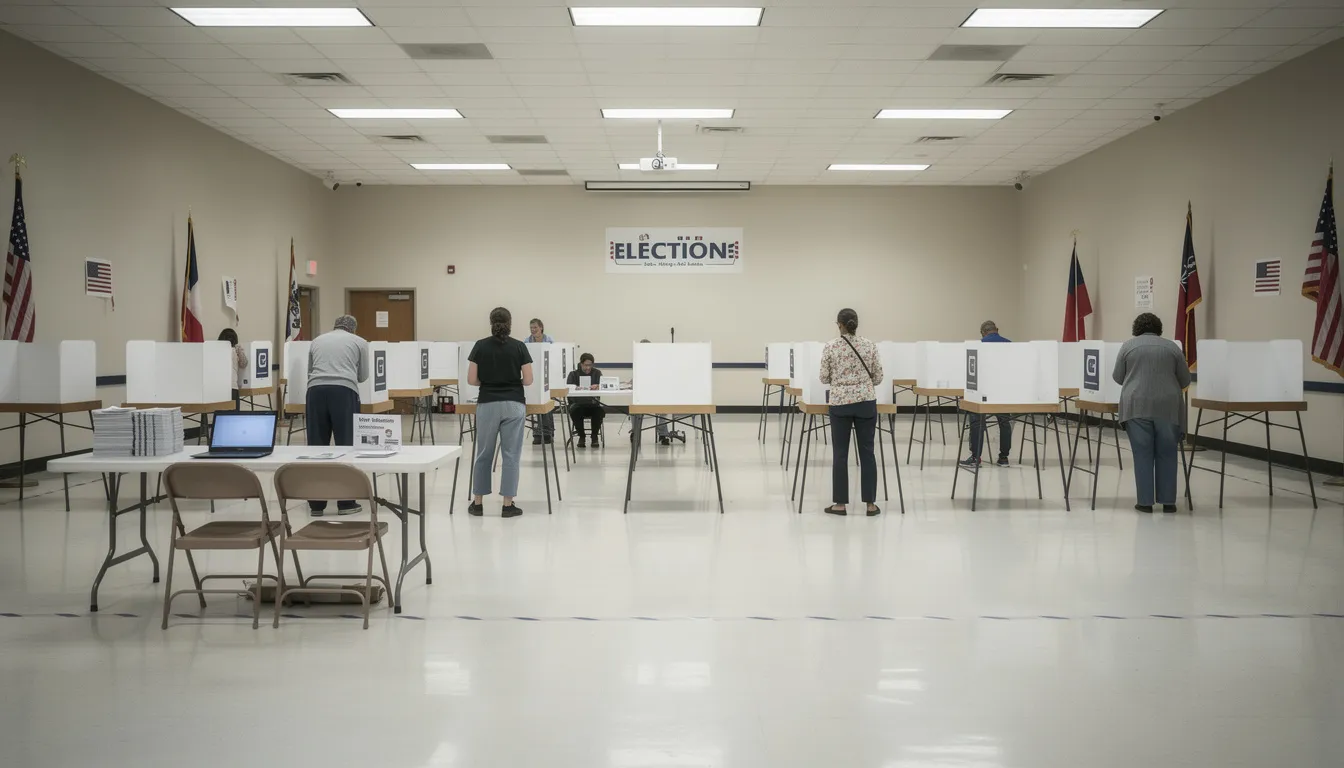
- GOTV (Get Out The Vote) & Election Day Operations
The tone and tactics shift in the final 2–3 weeks. The focus moves from persuasion to turning out identified supporters. Every resource should drive your people to the polls.
Build Your GOTV Universe
From your CRM data, filter:
- All “supporter” and “lean supporter” contacts
- Vote history (regular voters vs. sporadic voters)
- Early-vote status where available
These are your GOTV targets.
Plan the GOTV Calendar
Start 14–21 days before Election Day:
Timeframe | Activity |
21–14 days out | Final persuasion touches, reminder mail drops |
14–7 days out | Early voting promotion, supporter reminders |
7–3 days out | Heavy phone and text contact to non-voters |
Final 72 hours | All-hands door knocking, last text waves |
Target Supporters Who Haven’t Voted
Use automated dialing, texting, and canvassing lists filtered to:
- Identified supporters
- Those who have not yet voted (update nightly as early vote data arrives)
Poll Watching and Strike Lists
Where legal:
- Assign campaign volunteers to polling locations
- Track supporters who have voted
- Update lists in real time in your CRM or field tool
- Follow up with those who haven’t shown up
Vote-by-Mail and Absentee Operations
- Educate voters on deadlines during the few weeks before the election
- Monitor ballot requests and returns (where data is available)
- Send specific reminders to those who haven’t returned ballots
- Offer to help with the registration process where needed
Set Up an Election Day War Room
Establish:
- Clear communication channels (chat, SMS, phone trees)
- Rapid troubleshooting for polling location issues
- Centralized decision-making authority
- Legal support on standby
Compliance reminder: Double check local laws on Election Day activities, signage distances, and last-minute communication rules to avoid violations.

- Post-Election Wrap-Up & Next-Cycle Preparation
Professional campaigns treat post-election activities as part of the same project, not an afterthought. This is true whether you’re celebrating a victory or processing a loss.
Thank Your Supporters
Within 1–2 weeks after Election Day:
- Personalized emails to volunteers
- Calls to major donors and endorsers
- Small appreciation events for campaign staff
- Public thank-you on social media and your campaign website
Complete Legal and Financial Reporting
- File final campaign finance reports
- Settle any outstanding debts
- Close or convert bank accounts according to local election rules
- Archive compliance documentation
Conduct a Structured Debrief
Collect data and feedback from each department:
- Field: doors knocked, conversion rates, volunteer retention
- Digital: engagement metrics, cost per acquisition
- Fundraising: dollars raised by source, donor retention
- Communications: earned media hits, message penetration
Compile findings into a written after-action report.
Archive and Secure Data
- Export CRM records safely
- Store documents, creative assets, and analytics
- Respect privacy and legal requirements
- Maintain data for future use or transfer to party committees
Plan for the Future
Decide:
- Whether the candidate intends to run again
- How to support other candidates or party efforts
- Whether to shift into advocacy roles
- How to keep the supporter list engaged appropriately
Using integrated software like Pulsar makes it easier to preserve contact histories, outreach metrics, and modeled insights for the next cycle—whether that’s your race or building relationships with the wider audience for future campaigns.
Maximizing This Political Campaign Checklist With Technology
While this checklist can technically be followed with spreadsheets alone, serious campaigns benefit from purpose-built political technology such as Pulsar. The difference between a well-oiled operation and chaos often comes down to your tools.
Centralize Everything
All voter, volunteer, and donor data belongs in a political CRM so every interaction—door knock, text, phone call, donation—is logged to a single profile. No more hunting through spreadsheets or losing data between systems.
Use an Integrated Platform
Platforms like Pulsar combine:
- Preloaded voter files
- Canvassing with offline mapping
- Phone banking
- Texting
- Polling
- Modeled data
All in one place. This eliminates manual imports, reduces errors, and gives your campaign team real-time visibility into progress.
Configure for Your Race Level
Whether it’s a single-city council district or a multi-county congressional race, the same system can be configured with:
- Appropriate geographic boundaries
- Permission structures for campaign staff and volunteers
- Reporting at the level that matters
Monitor Progress with Dashboards
Track against your checklist:
- Voter contact totals vs. goals
- Volunteer hours logged
- Fundraising pace vs. targets
- GOTV universe coverage
Ready to see how Pulsar can implement this checklist for your 2026 or 2028 race? Schedule a demo or request a quote to get started with powerful tools designed for campaigns of every size.
Frequently Asked Questions
How far in advance should I start using this political campaign checklist for a local race?
For most local races, start at least 6–9 months before Election Day. For competitive citywide, countywide, or partisan races, 12 months is ideal. Even a school board campaign benefits from early planning—it gives you time to build relationships, recruit volunteers, and start fundraising before opponents lock up key supporters.
Do I really need political campaign software for a small school board or city council race?
Very small races can start with spreadsheets, but a political CRM like Pulsar quickly becomes valuable once you’re contacting hundreds of voters and coordinating dozens of volunteers. The time saved on data entry, the accuracy of your voter list, and the ability to track every conversation will more than justify the investment—especially when the alternative is lost contacts and missed follow up opportunities.
Can this checklist work outside the United States?
While legal and reporting details differ by country, the core phases—research, compliance, strategy, message, fundraising, voter contact, GOTV, and wrap-up—apply broadly to democratic elections worldwide. Localize the specifics (filing deadlines, contribution limits, campaign finance laws) to your national and local election rules, but the framework remains sound.
What if my campaign budget is under $25,000?
The same checklist applies, but prioritize low-cost, high-contact methods. Door-to-door canvassing, relational organizing, and targeted texting deliver more funds worth of impact per dollar than print media or TV. Maintain a minimal but professional web presence, focus on earned media through press releases and public events, and build a strong volunteer program to multiply your reach without hiring large paid staff.
How many staff and volunteers do I need to follow this checklist effectively?
Even the leanest successful campaign needs at least a campaign manager (or lead volunteer), a finance lead, and a field lead. A strong volunteer program—coordinated using tools like Pulsar—is the key to scaling voter contact without a large paid staff. Most campaigns can execute this checklist with 3–5 core team members and 20–100 active volunteers, depending on district size and competitiveness.