Key Takeaways
- Successful local campaigns combine classic tactics like door-knocking, mail, and local media with digital tools such as texting, social media, and data-driven targeting.
- Research and calculating a clear “win number” for your city, county, or school district in 2025–2026 is the essential starting point for any campaign plan.
- A small but organized team using a political CRM and voter contact software like Pulsar can coordinate canvassing, phone banking, and texting far more effectively than scattered spreadsheets.
- Local branding—including your logo, slogan, and personal story—applied consistently across yard signs, your campaign website, and social media pages is essential to stand out on crowded ballots.
- Campaigns should constantly test and refine outreach using voter data, modeled data, and real feedback from the field rather than relying solely on intuition.
Introduction: What Makes Local Election Campaigns Different?
A local political campaign operates on fundamentally different terms than a congressional or presidential race. When you’re running for city council, county commission, school board, or mayor in 2025 or 2026, victory doesn’t come from dominating cable news or winning national debates. It comes from showing up at neighborhood association meetings, fixing the perception that traffic on Main Street is unbearable, or convincing 1,500 community members in Ward 3 that you’ll actually address school overcrowding.
Consider a Ward 3 city council race in a town of 25,000 registered voters. Historical turnout data shows local elections averaging 20–40% participation compared to 60% or higher in presidential years. That means persuading just 1,500–3,000 voters through repeated door knocks and neighborhood events can decide the outcome. The political environment at the local level rewards direct personal contact, practical solutions to tangible problems, and genuine relationships built over months—not broad ideological battles.
This article delivers specific, actionable local election campaign ideas for first-time and returning candidates preparing for upcoming municipal and county elections. Whether you’re seeking a local office in 2025 or planning your campaign strategy for a 2026 school board at-large seat, these ideas will help you build a winning operation.
Throughout, we’ll reference Pulsar, a political campaign platform used by more than 120,000 campaigns—most of them local and down-ballot races. Think of Pulsar as the data and organizing engine behind many of the campaign ideas in this guide, combining a political CRM, preloaded voter files, canvassing tools, phone banking, and peer-to-peer texting in one place.
Research First: Understand Your Race and Your Win Number
Serious campaigns start 6–18 months before election day by researching laws, turnout patterns, and local issues. This foundation determines everything from your campaign budget to how you allocate volunteer time in the final weeks.
For a November 2026 general election, begin by contacting your city clerk or county election office to confirm filing deadlines (often 60–90 days before primaries), contribution limits (typically $250–$1,000 per individual in small races), and signage rules (for example, no yard signs within 100 feet of polling places). Getting these details wrong can disqualify your candidacy or trigger compliance issues.
Use past election results from 2018–2024 to estimate typical voter turnout in your ward or district. Look for precincts where margins were under 5%—these competitive areas often swing outcomes. State voter files and county websites are your primary sources for this historical data. If you’ve identified that turnout in your district fluctuates by 10–15% between election cycles, you can plan accordingly.
Pulsar can preload official voter files and past turnout data into its political CRM, so your campaign doesn’t have to build spreadsheets from scratch. This saves weeks of administrative work and lets you start analyzing your voter database immediately.
Calculate Your Win Number and Contact Goals
Your win number is the minimum number of votes you need to secure victory. The math is straightforward.
Say your district has 8,000 registered voters and historical data suggests 40% turnout. That means roughly 3,200 votes will be cast. For a plurality victory (most votes wins), you’d need about 1,601. For a majority requirement (50%+1), you’d need at least 1,601 as well, but likely more in a multi-candidate race.
Here’s the critical insight: plan to directly contact at least 1.5–2 times your win number via doors, phone calls, or text messages. Field studies show that multiple touches boost voter turnout by 8–10%, and single-contact conversion rates average around 20% compared to 35% for triple-contact. Over-contacting accounts for persuasion decay and ensures you’re not just reaching supporters, but actually motivating them to vote.
Use Pulsar to set numeric targets by precinct—for example, “1,200 contacts in Precinct 12 by October 15”—and track progress in dashboards visible to your campaign manager and field director. This transforms abstract goals into concrete daily tasks.
Map Local Issues and Opponents
Understanding local issues requires immersion, not just reading the news. Attend meetings where decisions happen:
- School board meetings where parents debate bus route cuts affecting 500 students
- Zoning hearings where traffic on Main Street dominates discussion
- Neighborhood association gatherings where property taxes spark heated conversation
- Local business roundtables where small business owners voice concerns about parking or permits
Build a simple “issue map” linking each neighborhood to 2–3 dominant concerns. Homeowner-heavy districts may care most about property taxes; family neighborhoods near schools prioritize safety and education funding; downtown residents focus on transit and walkability. Record this in your voter database or political CRM, not on scattered notes that get lost.
For opponent research, review incumbents’ voting records through city council minutes, examine their prior campaign mailers and social media pages, and pull donor reports from state databases to understand their base of support. A pro-development stance on rezoning, for instance, might alienate homeowners worried about traffic while appealing to construction industry donors.
Pulsar allows tagging potential voters by issue interest and support level during canvassing and phone banking. Tags like “supports sidewalk expansion” or “lean opponent” let you tailor messaging precisely when it’s time for persuasion outreach efforts.
Build a Lean but Professional Local Campaign Team
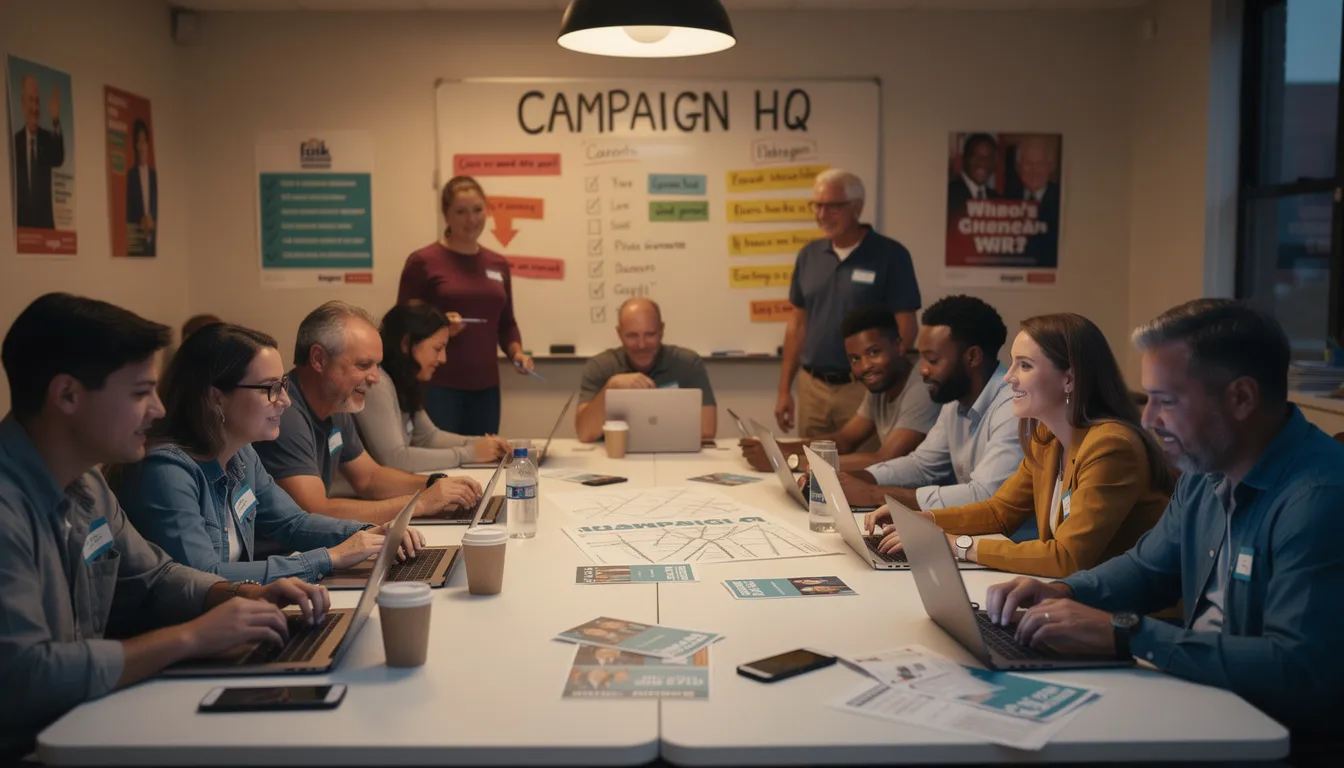
Local campaigns often run with 3–8 core staff or lead volunteers plus dozens of part-time volunteers. You don’t need a massive organization—you need clear roles and reliable coordination.
Essential roles for most local races include:
Role | Responsibility |
Candidate | Chief messenger, fundraiser, and public face of the campaign |
Campaign Manager | Oversees timeline, budget, and overall strategy execution |
Treasurer | Handles compliance, financial filings, and contribution tracking |
Field Lead/Field Director | Directs canvassers, phone bankers, and voter contact programs |
Digital Lead | Manages ads, social media platforms, and campaign website |
Volunteer Coordinator | Schedules shifts, maintains volunteer lists, and handles recruitment |
Even a 2025 town council race with a $10,000 campaign budget benefits from clearly assigned responsibilities. Disorganized races where nobody owns specific tasks see volunteer churn rates as high as 50%.
Recruit, Train, and Retain Volunteers
Start assembling your volunteer base early from concrete sources:
- Neighborhood Facebook groups (a “Anytown Neighbors” group with 2,000 members is a goldmine)
- Local party meetings and activist networks
- Unions with members in your district
- PTAs and school parent organizations
- Faith communities and churches
- University clubs and high schools with civic engagement programs
Your volunteers become force multipliers, but only if properly trained. A 60–90 minute training session should cover:
1. How to use the canvassing or phone banking app
2. How to discuss the candidate’s three main issues using provided scripts
3. How to enter notes into the voter contact system accurately
4. How to answer questions about policy positions
Data from over 4,000 campaigns shows that structured training yields 15–20% higher volunteer retention compared to throwing people into the field unprepared.
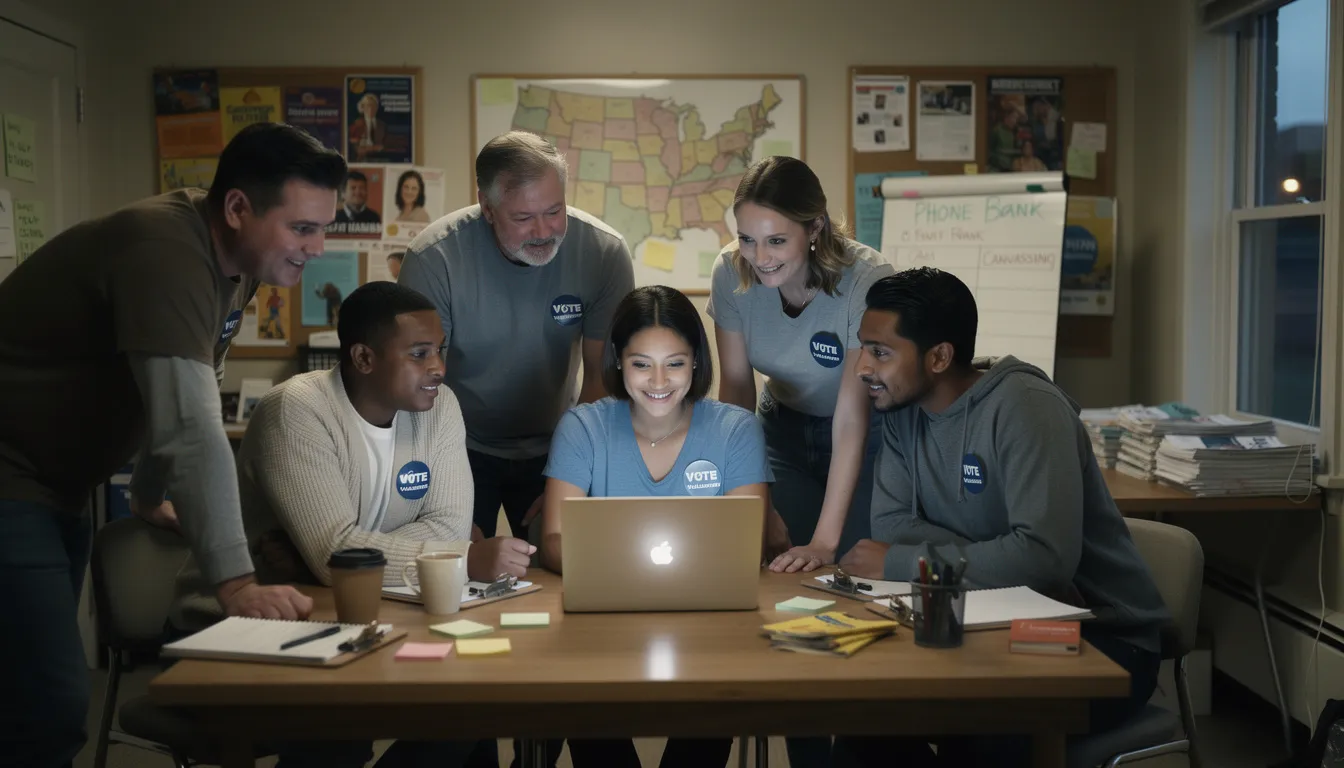
Create regular “campaign nights”—say, every Tuesday and Thursday evening—where volunteers phone bank or send text messages from headquarters or home. Provide pizza, set clear goals (200–500 calls per session), and celebrate progress publicly.
Pulsar’s canvassing, phone banking, and texting tools let volunteers log in from anywhere, receive assigned lists, and sync notes back to the campaign CRM automatically. This reduces administrative burden by roughly 40% compared to manual spreadsheet management.
Craft a Clear Local Brand: Logo, Slogan, and Story
On a crowded local ballot with five candidates for two seats, voters need a reason to remember your name when they’re standing in the booth. A recognizable visual identity and a simple promise cut through the noise.
Create a clean logo using the candidate’s last name, office, and election year—something like “Garcia for Council 2026.” Limit yourself to 1–2 colors that work in black-and-white for print materials. Blue conveys trust; red suggests energy and urgency. Pick colors that align with your core message.
Develop a concise slogan of 5–7 words that ties directly to local priorities. Examples include:
- “Fix Streets, Fund Schools”
- “Safe Streets, Strong Schools”
- “Tax Relief, Better Transit”
- “Neighbors First, Always”
Test your slogan with a small focus group—family, friends, trusted community members—for recall. Studies show branded visuals lift name ID by 25%, and a memorable slogan speeds that recognition.
Apply this brand consistently across every touchpoint: yard signs (plan for at least 500), door hangers (5×7” with a QR code linking to your campaign website), email headers, and Pulsar-generated texts. Consistency builds recognition over months of repetition.
Telling a Local Story that Resonates
Your biography isn’t just a resume—it’s the narrative spine of your campaign message. Frame your story around who you are (longtime teacher, small-business owner, neighborhood organizer) and a specific local problem you’ve worked on fixing.
Include one or two short, real anecdotes to humanize your campaign. For example: “At the 2023 back-to-school night, I met 100 parents who feared their kids’ bus routes were being cut. I organized petitions, attended every school board meeting for six months, and helped save three routes.” This kind of story makes you relatable and demonstrates you’ll actually fight for constituents.
This narrative should be the backbone of:
- Your 2-minute stump speech at community events
- Your website’s “About” page
- Introductory emails to new supporters
- Canvassing scripts in Pulsar that volunteers use at the door
When your story is consistent across channels, voters encounter the same authentic candidate whether they meet you at a farmers market or receive a text message before early voting.
Build Your Voter File and Use Data to Target Smartly
Accurate, up-to-date voter data is the foundation for all modern local election campaign ideas. Every door-knocking route, fundraising call list, and Get Out The Vote text batch starts with your voter file.
Obtain official voter lists from your county election office or state party. Costs range from $0.10–$0.50 per record depending on jurisdiction. Prioritize these fields:
- Full name and mailing address
- Voting history (how many elections they’ve participated in over the past 6 cycles)
- Party registration or primary participation (where available)
- Phone numbers and email when included
Segment your list into three buckets:
- 1. Core supporters: Voters with 80%+ turnout history who align with your party or have expressed support
- 2. Persuadable voters: Sporadic voters (participated in 2–4 of the last 6 local elections) who haven’t declared allegiance
- 3. Low-propensity targets: Rarely vote locally but might turn out for the right candidate or issue
Pulsar includes preloaded voter files in more than 30 states, plus modeled data such as vote propensity scores (0–100) and likely party lean. This speeds up setup significantly for local campaigns that don’t have weeks to spend building databases manually.
Segmenting and Tagging Voters for Better Outreach
Generic outreach wastes resources. Create practical segments based on behavior and demographics:
- Frequent municipal voters (typically 30% of your base—these are your most likely voters)
- Presidential-only voters (rarely participate in local elections but might be mobilized)
- Parents in School District A (modeled data shows 15% higher engagement on education issues)
- Small business owners on Main Street (pull from chamber of commerce lists or business permits)
After every conversation at the door or on the phone, add tags for issues (#propertytaxes, #publicsafety, #parks) and support level (supporter, undecided, opposed). This creates a living voter database that grows more valuable daily.
In Pulsar, these tags build targeted universes for mail, text, or phone programs. Want to invite all “undecided” voters tagged #seniors to a senior-center event? Generate that list in seconds. Need to send a property tax explainer to homeowners in Precinct 7 who haven’t committed to a candidate? Give them a call using Pulsar’s phonebank system.
Core Local Campaign Ideas: Field and Direct Voter Contact
Face-to-face and one-to-one contact remains the most persuasive tactic in city and county races, even as digital tools evolve. Randomized controlled trials consistently show that personal canvassing converts undecided voters at rates no Facebook ad can match.
Your campaign plan should specify how many doors, phone calls, and text messages must be completed weekly from launch through election day. Break this into daily and weekly targets that volunteers and staff can track.
Pulsar helps structure these outreach efforts by generating walk lists, dialer lists, and text batches from the same voter database. Everyone works from one source of truth.
Door-to-Door Canvassing
Effective campaigning at the doors follows proven best practices:
- Shift length: 2–4 hours is optimal before fatigue sets in
- Target density: Focus on high-density neighborhoods where you can knock 25–35 doors per hour
- Prioritize swing precincts: The competitive areas you identified in research deserve the most attention
- Avoid low-value turf: Skip areas that are overwhelmingly for your opponent or have extremely low turnout history
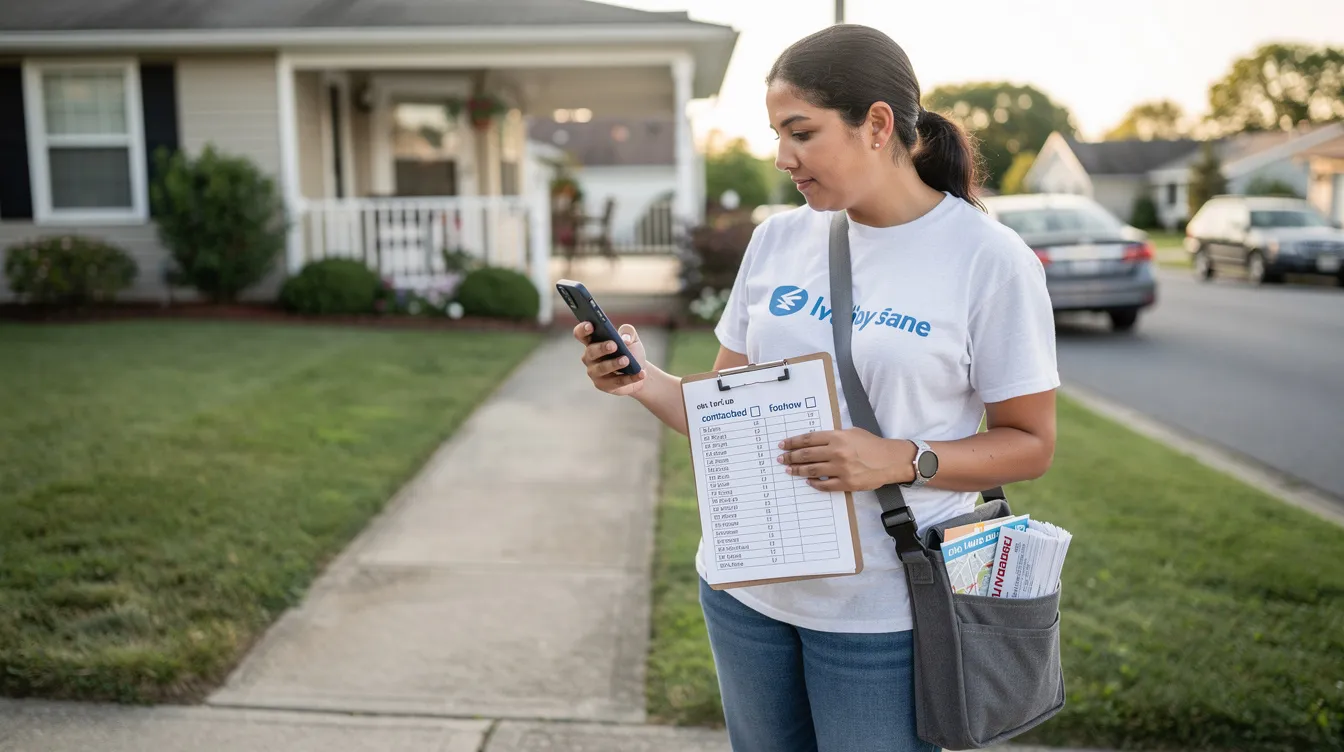
Equip canvassers with a short field script containing 2–3 issue questions (“What’s your biggest concern about traffic on Main Street?”) and a clear ask (vote commitment, yard signs request, email sign-up). Keep conversations focused and data-rich.
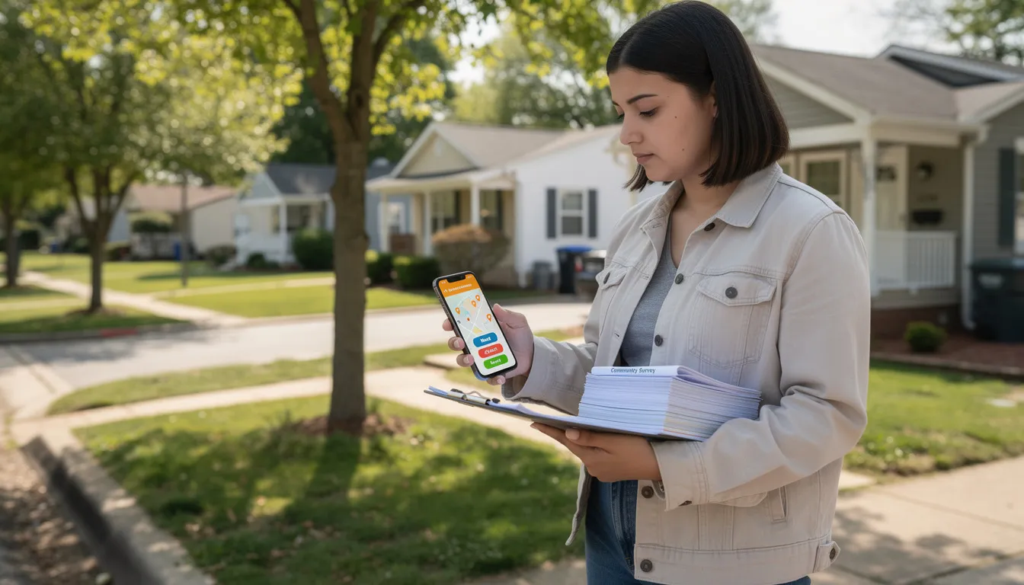
Pulsar’s canvassing app creates efficient walking routes using GPS that minimize dead ends. Campaign managers can see volunteer progress in real-time on a map, and every note and support level captured syncs back to the CRM automatically.
Phone Banking and Texting for Scale
Phone calls work best for deeper conversations with older voters or in rural areas where door-knocking is inefficient. Expect 50–75 calls per hour from trained phone bankers. Texting scales to 10,000 messages per day and works well for reminders, event invitations, and fast updates to younger or busy voters.
Structure calling in waves throughout your campaign:
Phase | Timing | Purpose |
Voter ID | 6–4 months out | Identify supporters, undecideds, and opponents |
Persuasion | 4 months–2 weeks out | Share your core message with persuadable voters |
GOTV | Final 7–10 days | Turn out supporters with reminders and logistics help |
Studies show text reminders boost voter turnout by approximately 7%. Response rates on peer-to-peer texting average 5–8%, making it an efficient way to reach voters who don’t answer phone calls.
Pulsar’s built-in phone banking and political texting tools automatically load target universes, assign them to volunteers, and track outcomes in one CRM. You’ll know exactly which voters have been contacted, their responses, and what follow-up is needed.
Leveraging Local Events and Public Appearances
You can’t knock every door, but you can meet hundreds of potential voters by showing up where they already gather. Prioritize:
- Farmers’ markets (500+ attendees on a busy weekend)
- Youth sports games and school concerts
- Neighborhood cleanups and volunteer days
- Faith community fairs and church events
- Local festivals and parades
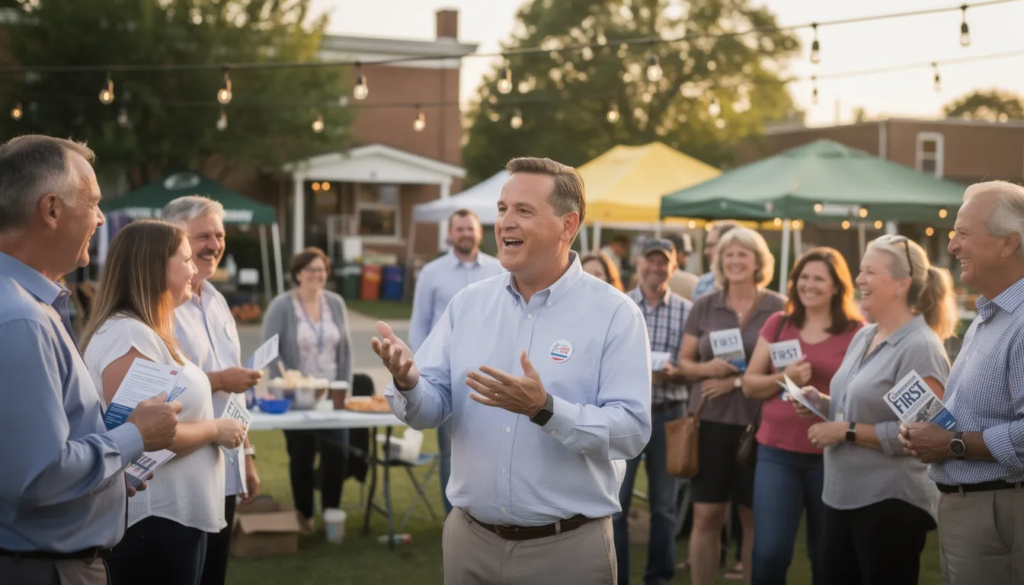
Plan at least one monthly “signature” event where the candidate answers local questions on the record. Saturday morning coffee chats (expect 50 attendees) or quarterly town halls build credibility and generate endorsements. These events also produce content for social media pages and your campaign website.
Invitations and follow-ups for these community events can be managed via Pulsar text campaigns. Target voters living within a certain radius of the event or filter by issue tags to invite people most likely to care about the topic.
Digital and Media Ideas for Local Elections
Modern local campaigns must show up where residents already spend time: local news sites, Facebook groups, Instagram, and email inboxes. A digital campaign extends your reach beyond what door-knocking alone can accomplish.
Digital tactics work best when they reinforce field efforts. Use the same logo, slogan, and core themes online that your canvass team shares at the door. This consistency strengthens your campaign message across every voter touchpoint.
Create a Focused Campaign Website
Your campaign website doesn’t need to be elaborate, but it must be functional and clear. Include these pages:
- Homepage: Hero image, slogan, and primary call to action (donate or volunteer)
- About: Your biography and the story that frames your candidacy
- Issues: 2–3 bullet points per issue with your track record and future plan
- Events: Upcoming town halls, canvasses, and community appearances
- Donate/Volunteer: Clear forms with minimal friction
Use specific calls to action like “Sign up to knock doors in October 2025” or “Join our neighborhood text list for Ward 2 updates.” Generic “Get Involved” buttons underperform compared to concrete asks.
Use Social Media Strategically, Not Randomly
Trying to maintain active presences on every platform spreads your resources too thin. Choose 1–2 core social media platforms based on local demographics:
- Facebook: Best for reaching homeowners 45+, particularly in suburban and rural areas
- Instagram/TikTok: Better for reaching renters and voters under 35
A sustainable posting cadence looks like 3–5 posts per week mixing:
- Short policy explanations (90 seconds or less on video)
- Behind-the-scenes content showing canvassing, event prep, and volunteer energy
- Volunteer spotlights celebrating your team
- Endorsements and community support
All content should be branded consistently with your logo and colors.
Consider paid micro-targeted ads around key election dates: campaign launch, early voting start, absentee ballot deadlines. Programmatic geotargeting by zip code or 5-mile radius runs $2–5 CPM and can reinforce your message to voters you’ve already contacted in the field. Use Pulsar-generated voter lists to inform audience choices where platform rules allow.
Email Newsletters and Local Press Outreach
A biweekly email newsletter keeps supporters engaged and demonstrates campaign momentum. Include:
- Field metrics (“We knocked 1,200 doors in September!”)
- Upcoming events with RSVP links
- Short issue explainers relevant to current city or county debates
- Donation asks tied to specific goals
Build a media list of 10–15 local reporters, bloggers, and community newsletter editors. Send targeted press releases for your launch event, major endorsements, and policy rollouts. Local press coverage delivers accurate information to voters who don’t see your digital ads.
Fundraising and Budgeting for a Local Race
Even “small” campaigns for township or school board can cost several thousand dollars for mail, yard signs, digital ads, and voter contact tools. Don’t be caught off guard by fundraising efforts that feel endless—they’re a necessary part of the electoral process.
Write a basic campaign budget early, covering typical line items:
Category | Percentage of Budget (Example) |
Signs and print materials | 35–40% |
Digital ads | 15–20% |
Direct mail | 15–20% |
Software/tools (like Pulsar) | 5–10% |
Events and miscellaneous | 10–15% |
Fundraising is an ongoing process, not a one-time event. Build call time and donor outreach into your weekly campaign schedule alongside voter contact.
Build a Local Donor Network
Start with a personal “prospect list” of 100–300 contacts: family, colleagues, business owners, community leaders, and past political contacts. Set a specific first fundraising goal and deadline—for example, “Raise $3,000 by August 15 to fund our first 500 yard signs.”
Schedule call time blocks where the candidate personally phones potential donors. Use talking points that tie contributions to concrete actions:
- “Your $150 funds 3,000 texts before early voting starts.”
- “A $250 gift pays for 100 door hangers in our most competitive precinct.”
This approach transforms abstract fundraising into tangible investments that donors can visualize.
Low-Cost Fundraising Ideas for Local Campaigns
You don’t need major donors and black-tie galas to raise funds for a local race. Consider:
- Small house parties or backyard meet-and-greets (50 attendees × $25 suggested donation = $1,250)
- Themed events like a “Back-to-School BBQ” or “Neighborhood Policy Night”
- Coffee with the candidate at local cafes
Integrate online giving links on your campaign website, in email signatures, and in text messages. Always include required campaign finance disclaimers to stay compliant.
Track every contributor carefully to stay within local limits. Record this in your political CRM to avoid compliance headaches and ensure you can return to supporters for the voting process push in the final weeks.
Using Pulsar to Power a Modern Local Campaign
Pulsar is a political campaign platform built specifically for races like city council, mayor, county commission, and state legislative campaigns. It’s designed to scale from a small-town school board race to a competitive state senate campaign without requiring different tools at each level.
The platform combines several capabilities in one place:
- Political CRM: Track every voter and volunteer
- Preloaded voter files: Access official voter data in 30+ states without manual uploads
- Canvassing tools: Generate optimized walk lists with GPS
- Phone banking: Built-in dialer with script support and outcome tracking
- Peer-to-peer texting: Send targeted text messages at scale with compliance features
- Modeled data: Vote propensity scores and partisan lean predictions
This eliminates the need for multiple disconnected systems—no more juggling separate spreadsheets, texting platforms, and volunteer canvassing notes that don’t talk to each other.
Think of Pulsar as your campaign’s “command center” for voter contact, volunteer coordination, and campaign data from launch through election day.
If you’re planning your 2025–2026 campaign, consider scheduling a demo or requesting a quote before finalizing your campaign plan. Building your strategy around the right tools from the start prevents painful mid-campaign transitions.
Concrete Ways Pulsar Helps Local Campaigns
School board candidate scenario: A first-time school board candidate imports or accesses voter files through Pulsar, segments parents and educators, and sends targeted text messages inviting them to a 2025 education town hall. Response tracking shows 18% RSVP rate, and every attendee is tagged for future GOTV outreach.
Small-town mayoral campaign: A candidate uses Pulsar’s offline maps to build walk lists for every precinct—critical in rural areas with spotty cell coverage. The campaign tracks which doors have been knocked, monitors daily goals in real time, and identifies neighborhoods that need more attention.
Building GOTV universes: Every interaction—door conversation, phone call, text response—logs in one system. By October or November, you have clear supporter and undecided universes for Get Out The Vote. Supporters receive reminder texts with their polling places and early voting hours. Undecideds get one final persuasion push.
More than 120,000 campaigns have used Pulsar, the vast majority being local and down-ballot races. The platform is battle-tested for both partisan and nonpartisan elections.
FAQ
This section answers common practical questions local candidates often ask after reading about campaign ideas, focusing on timing, budget, tools, and legal considerations.
When should I start planning my local election campaign?
Ideal lead time is 9–18 months before election day, with at least 6 months for smaller races. A rough timeline might look like this:
- 12–18 months out: Research election rules, build relationships, assess viability
- 9–12 months out: Formal announcement, begin fundraising, recruit core team
- 6–9 months out: Voter file setup, volunteer training, initial outreach
- Final 90 days: Intensive voter contact—doors, calls, texts—leading to GOTV
Voter file setup and Pulsar onboarding can happen early so that all contacts are captured from day one. Starting in the system early means nothing slips through the cracks.
How much money do I really need for a small city council or school board race?
Realistic budgets vary widely based on district size and competitiveness:
- Very small-town races (under 5,000 voters): $2,000–$5,000
- Small city or county races (5,000–20,000 voters): $5,000–$15,000
- Mid-sized city council or competitive county races: $15,000–$50,000+
Build your campaign budget based on how many voters you need to reach and which communications channels you’ll use. Investing in a voter contact platform like Pulsar can pay for itself by making field work more efficient compared to ad-hoc tools that waste volunteer time.
Do I need a full-time campaign manager for a local race?
For competitive or larger-city local races, a full-time campaign manager helps significantly. Smaller town or district campaigns often succeed with a part-time manager or a very organized volunteer coordinating efforts.
Whoever fills this role needs basic comfort with data and software to manage the political CRM and field programs. If your campaign manager can’t navigate Pulsar or similar tools confidently, effective campaigning becomes much harder.
How can I stay compliant with local election and data rules?
Check with your city clerk, county election office, or a local attorney about campaign finance limits, reporting deadlines, and disclaimer requirements before raising money or spending anything. Rules vary significantly by jurisdiction.
Campaigns must also be mindful of privacy and texting regulations. Using reputable tools like Pulsar helps manage opt-outs and consent tracking for compliance with regulations like TCPA.
Is Pulsar only for large campaigns, or is it practical for local races?
Pulsar is specifically designed to scale. Plans fit single-city or single-county races as well as statewide campaigns. Many of the 120,000+ campaigns that have used Pulsar are down-ballot local candidates who needed an affordable but professional-grade voter contact and campaign data solution.
Whether you’re running for an elected office in a town of 5,000 or a county of 500,000, the platform adapts to your race size and budget. The vital role Pulsar plays is eliminating the data silos that cause local campaigns to lose track of supporters and volunteer efforts—making sure your civic participation efforts translate into votes on election day.