Key Takeaways
- Effective political campaigns in 2026 need both physical materials (signs, mail, literature) and digital tools (texting, CRM, phone banking) from day one
- Core “must-have” materials to launch include a brand kit, website, voter contact system like Pulsar, yard signs, literature pieces, and social profiles
- A political CRM and voter contact platform ties all campaign materials together, ensuring consistent messaging and targeted outreach across every channel
- Timelines matter: design and order printed materials 6-10 weeks before deployment, with voter data infrastructure set up even earlier
- This guide serves as a practical checklist with short sections and clear bullet points, not theoretical frameworks
Introduction: Why Campaign Materials Still Win Elections
Since the early 2000s, winning campaigns have combined classic print materials with data-driven digital tools to reach more voters and drive turnout. Whether you’re running for city council or U.S. Senate in the 2026 election season, your campaign materials encompass everything from logos and yard signs to texting scripts and canvassing lists—all of which must work together.
Modern outreach platforms like Pulsar centralize voter data and communications so that every piece of material supports the same strategy. This article provides a practical checklist of what you need, when to order it, and how to keep your message consistent across all channels.
Campaign Brand Kit: Foundations Before You Print Anything
Before ordering any custom political campaign materials, establish your brand kit. This foundation ensures every designer, printer, and volunteer references the same standards.
Identity elements:
- Candidate name usage (e.g., “Maria L. Torres” for legal disclaimers vs. “Maria Torres” for signs)
- Office sought and election date
- Official committee name for disclaimers (e.g., “Friends of Maria Torres”)
Visual assets:
- Logo versions (horizontal, stacked, with/without tagline)
- 2-3 brand colors with hex codes (e.g., primary blue #0033A0)
- 1-2 campaign fonts for readability on signs and screens
Messaging components:
- 1-2 sentence candidate bio
- 3-5 word slogan capturing key messages
- 3-4 issue planks
- 50-75 word standard blurb for mail, web, and scripts
Create a simple brand guidelines PDF so your campaign colors, fonts, and naming rules stay consistent. Include legal requirements for disclaimers: “Paid for by Friends of [Candidate Name], [Address], [Treasurer Name]” with state-specific placement guidance.
Core Printed Materials: Signs, Banners, and Door Literature
Order these materials in the first 60-90 days after filing. Political campaign printing should be prioritized based on visibility and voter contact needs.
Yard signs:
- Common sizes: 18” x 24” and 24” x 36” on corrugated plastic with H-stakes
- 1-2 color designs emphasizing candidate name (60% of sign space) and office
- Order in waves: 250-500 for local races, 1,500+ for competitive state legislative contests
- Place in high traffic areas for maximum name recognition
Campaign banners:
- Vinyl political banners (3’ x 8’ or 4’ x 10’) for launch events, debates, and headquarters
- Use as backdrops in campaign photos and livestreams to maximize reach to a wider audience
Posters and window signs:
- 11” x 17” or 12” x 18” for businesses and supporters’ windows
- Include clear name/office/date with QR codes linking to volunteer forms
Door hangers and palm cards:
- Door hangers: 4.25” x 11” for canvasses and early voting sites
- Palm cards: 4” x 9” with photo, slogan, 3 issue bullets, website, QR code, and disclaimer
- Highly effective for festivals and door-to-door contact
Event signage:
- Directional signs on foam board or coroplast (“Rally Entrance,” “Phone Bank Here”)
- Essential for organized GOTV operations
All physical materials should mirror your digital branding and match the data in your voter contact platform—same office name, election date, and messaging that appears in Pulsar’s scripts.

Direct Mail and Print Collateral: Reaching Voters at Home
Direct mail achieves 90% open rates compared to email’s 20-30%, making it a cost effective channel for reaching voters at home. Political printing services can assist with the ordering process for bulk orders.
Common mail types:
- Introductory bio piece mailed shortly after launch
- Contrast piece closer to early vote periods
- GOTV reminder targeting high-propensity voters 7-10 days before election day
Standard formats:
- 6” x 11” postcards for name ID (lowest prices per piece)
- Folded self-mailers for more detailed messaging
- #10 envelope letters for primary voters seeking depth
Coordinating with your CRM:
- Import or use preloaded voter files in Pulsar
- Segment by district and voting history
- Exclude supporters and volunteers already contacted multiple times
- Log households receiving mail so canvassing and texting avoid over-contact
Plan USPS in-home dates carefully. Landing pieces before early voting start dates requires ordering 3-5 weeks ahead, accounting for turnaround time and delivery windows.
Digital Campaign Materials: Website, Email, and Social Media
Digital campaign products form the backbone of modern outreach, with 95% of campaign website traffic now coming from mobile devices.
Campaign website essentials:
- Home page with slogan and clear CTA
- About/Bio, Issues, Volunteer sign-up, Donate, and Contact pages
- Mobile-responsive design with SSL security
- Clear disclaimers in the footer meeting legal requirements
Email program:
- Welcome series (1-3 short emails for new subscribers)
- Standard update templates and fundraising appeals
- Consistent sender name for recognition (25-40% open rates achievable)
Social media profiles:
- Facebook, Instagram, X/Twitter (and TikTok for younger audiences)
- Profile and header images matching your brand kit
- Pinned posts announcing candidacy with key links
Digital graphics:
- Reusable templates for quote cards and event announcements
- Eye catching “I’m voting for [Candidate]” shareable graphics
- Fundraising deadline countdown images
Links in digital materials should route to tracked URLs connected to your CRM. Pulsar’s volunteer and event tracking tools can capture sign-ups directly from these touchpoints.
Voter Contact Materials: Scripts, Lists, and Data Infrastructure
Contact materials are as critical as print products. A platform like Pulsar makes it easy to create, store, and deploy standardized voter contact tools.
Phone banking scripts:
- Brief intro and permission to continue
- 2-3 issue talking points
- Support ID question with data capture options
- Stored centrally for easy updates
Texting templates:
- Short, compliant SMS messages (98% open rates)
- Initial outreach, event invites, ballot chase, and GOTV variations
- Merge fields for voter name and race information
Canvassing materials:
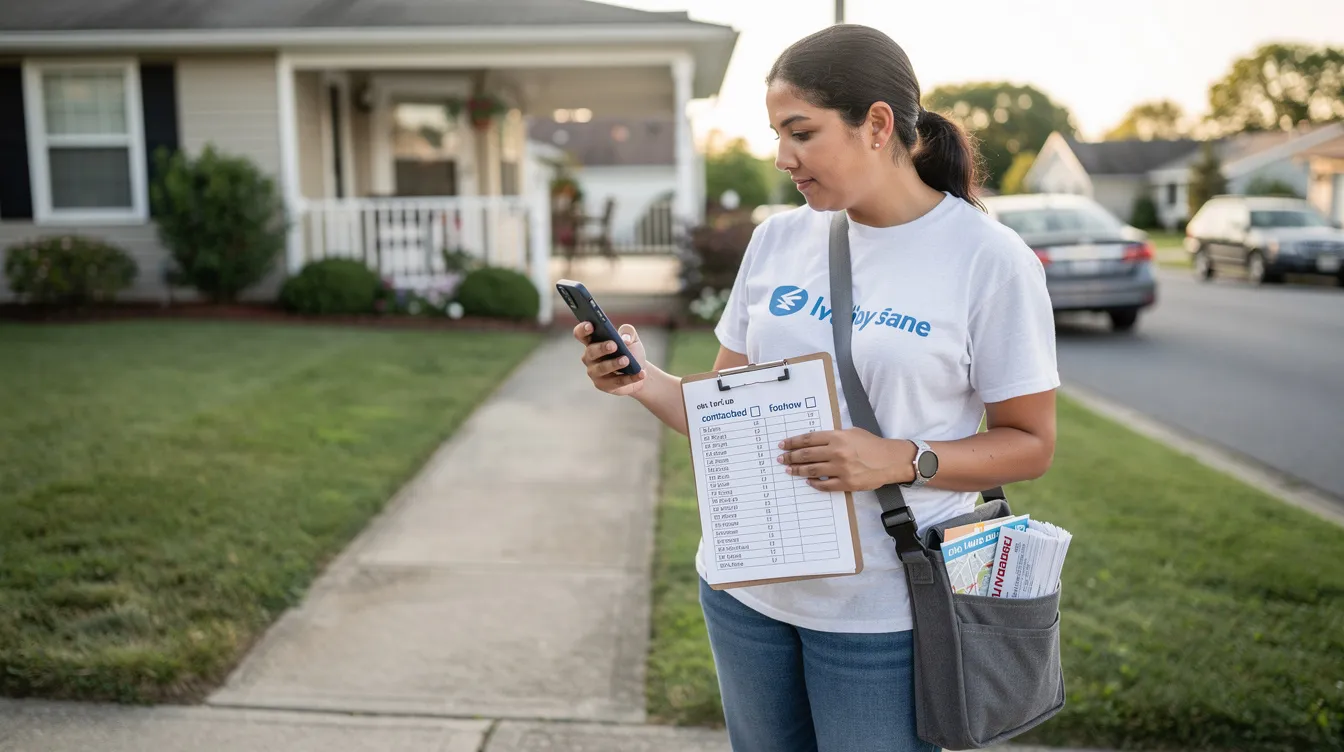
- Digital walk lists on smartphones syncing back to your political CRM
- Simple door scripts and survey questions
- Printed walk packets as backup
Voter data infrastructure:
- Centralized system with preloaded voter files
- Modeled scores (turnout propensity, partisanship)
- Fields for tracking contact history and support levels
Test all contact materials early in a pilot canvass or phone bank. Refine based on results—campaigns that adapt scripts based on CRM data see 10-15% persuasion rates.

Volunteer and Field Operations Materials
Well-designed volunteer campaign supplies reduce staff time spent answering questions and increase data quality from field activities.
Recruitment materials:
- One-page flyers specifying roles (door knocker, phone banker, event host)
- Social media graphics with clear time commitments
- Landing pages for tracking sign-ups
Training resources:
- Quick-start guides (2-3 page PDFs)
- Slide decks for Zoom trainings
- Short video walk-throughs of canvassing and phone tools
Field staging materials:
- Sign-in sheets or digital forms
- Turf maps or digital map views
- Daily shift schedules and printed cheat sheets with scripts
A platform like Pulsar can manage voter data, assign turfs or call lists, and track completed contacts in one place—essential for scaling a successful campaign.
Fundraising Materials: Building Financial Support
Campaign packages for fundraising should include both digital and physical tools from launch through GOTV.
Call time materials:
- Printed or digital call sheets with donor history and capacity notes
- Short, structured fundraising pitch script
Fundraising events:
- Invitations (postcards or emails) with RSVP forms
- Sign-in sheets and name tags
- Pledge cards or QR codes linking to donation pages
Online donation assets:
- Secure donation page with recurring-gift options
- Branded confirmation and thank-you pages
- High quality images reflecting your campaign
Compliance:
- Coordinate with your treasurer on legally required contributor information
- Sync online and offline forms into your CRM or donor database
- Consider working with dedicated account managers at your political printing services
Legal, Compliance, and Accessibility Considerations
Every piece of campaign collateral must meet legal requirements from day one.
Disclaimers:
- Research jurisdiction-specific “paid for by” language
- Size and placement requirements vary by state (some require 1/16” minimum font)
- Apply to custom political signs, mailers, digital ads, and texting
Signage regulations:
- Local ordinances on sign size and placement near roads and polls
- Time windows for posting and removal of political signs
Digital accessibility:
- High contrast color combinations
- Readable font sizes and alt text for images
- Captions on videos
Data protection:
- Store voter and donor data in secure systems like Pulsar
- Role-based access and clear data-handling policies
Record-keeping:
- Archive versions of major materials
- Keep records of mail drops and vendor invoices for compliance
Timeline: When to Produce and Deploy Campaign Materials
Pre-launch (6-12 months for larger races, 3-6 for local):
- Finalize brand kit and website framework
- Set up voter data in a CRM like Pulsar
- Design online your initial artwork for signs and literature
Launch phase (announcement to first 60 days):
- Roll out website and social profiles
- Deploy first wave of yard signs and palm cards
- Create phone and texting scripts for early outreach
- Submit initial print orders with attention to turnaround time
Mid-campaign:
- Expand custom campaign signs footprint based on supporter feedback
- Begin direct mail program
- Deepen data collection from canvassing
- Order online additional campaign items as needed
Early vote and absentee period:
- Shift to ballot chase pieces and targeted texting
- Deploy reminder mailers
- Focus digital content on how and when to vote
Final 2-3 weeks (GOTV):
- High-visibility banners at rallies and legal polling distances
- Tight GOTV scripts for phones and doors
- Streamlined volunteer materials for rapid shifts
- Every vote counts—maximum intensity on supporter turnout

How Pulsar Connects Your Campaign Materials and Strategy
A unified political tech platform ties together all the materials discussed above. Pulsar’s preloaded voter files and political CRM help campaigns target where to place custom political signs, who should receive mail, and which voters to prioritize for texting and phone outreach.
Scripts for phone banking, canvassing, and texting can be created and updated centrally, so volunteers always have the latest talking points. Engagement data—sign requests, event RSVPs, volunteer sign-ups, supporter IDs—informs which materials to print more of and which neighborhoods to focus on.
More than 120,000 campaigns have used Pulsar to coordinate their voter contact and campaign operations. Schedule a demo or request a quote to see how the platform can support your 2026 election campaign from first contact to GOTV.
Frequently Asked Questions
What is the minimum set of materials I need to launch my campaign?
At minimum, launch with a simple brand kit, basic website with donate and volunteer forms, one core printed piece (palm card or door hanger), a modest run of yard signs, and standardized scripts inside a voter contact tool. Even small city or school board races benefit from a low-cost political CRM like Pulsar to keep supporter information organized from day one. An account manager at your printing vendor can assist with campaign brochures and other campaign supplies.
How much should I budget for campaign materials in a local race?
For a small city council race, physical materials (signs, literature, mail) typically run $2,000-$10,000, while digital tools (website, CRM, texting credits) add another critical line item. Budgets vary by media market—focus spending on materials that directly support voter contact rather than just awareness. Look for political campaign supplies vendors offering bulk orders at competitive prices.
When should I start ordering yard signs and printed literature?
Finalize designs and place initial print orders 6-10 weeks before deployment to allow for revisions, production, and distribution to supporters. Additional waves of signs and literature can be ordered closer to early voting once you have better data on demand. Work with your vendor’s assistance team to understand their turnaround time and submit orders early.
How do I keep my message consistent across all materials and platforms?
Build a short message guide based on your brand kit and store it somewhere accessible to staff, consultants, and volunteers. Use a centralized platform like Pulsar for scripts and outreach templates. Share logo and color files with all designers and vendors—many offer an online design tool to help you design online while maintaining brand consistency. This creates a lasting impression with voters who see your materials.
Do I need different materials for primary and general elections?
Core materials (logo, color scheme, website, basic literature) can carry over, but messages, mail pieces, and digital content should be updated for new audiences. Data in your political CRM identifies which voters saw primary materials and need refreshed messaging for the general. A range of political approaches may be needed depending on whether you’re building awareness or drawing contrasts. Focus your stand on issues that resonate with general election voters while maintaining support from your base.