Every political campaign competes for attention. Voters scroll past ads, ignore calls, and skip emails, but they read texts. Political SMS marketing turns a simple message into a personal contact that motivates voters to respond.
According to Infobip, turnout can increase by 9.3% when voters receive short and timely reminders to participate. Text messages reach people where their focus is highest, on their phones.
This article explains how SMS can help your campaign engage supporters, raise funds, and increase voter turnout.
What Makes Political SMS Marketing Effective?
Political SMS marketing uses text messages to reach voters during an election campaign. Campaigns send these messages to share updates, issue reminders, invite supporters to rallies, and drive participation.
Political text messages connect campaigns with voters through their mobile phones and make communication quick and personal.
Unlike phone calls or emails, political campaign texts feel personal and relevant. A message that includes a voter’s name, polling place, or event link feels more like a one-to-one note than a broadcast.
This personal tone helps campaigns keep supporters informed about important dates and upcoming events.
The Role of Political SMS Marketing in Election Campaigns
Political SMS marketing keeps your campaign connected to voters throughout the election cycle. It helps you share updates, track opinions, and encourage turnout through short, personal text messages.
Campaigns use SMS marketing to:
- Build a supporter list with consent: A voter database is only useful if contacts agree to receive texts. Use an opt-in system with a short code promoted on flyers, social media, and during campaign events. This method builds a reliable list of interested voters.
- Identify voter preferences: Send short surveys to collect opinions on key issues or candidate positions. Use these responses to segment voters and tailor follow-up messages.
- Recruit and organize volunteers: Send confirmation texts for canvassing, phone banks, or training sessions. You can also remind volunteers about schedules and report times.
- Increase turnout: On election day, send reminders that include polling locations, hours, and transportation details. These targeted messages help turn supporters into actual voters.
- Raise donations: Texts with links to fundraising pages reach committed supporters instantly. Explain exactly how contributions will be used.
Political SMS marketing keeps campaigns focused, informed, and connected with the voters who decide the outcome.
Best Practices for Political SMS Campaigns
Compliance is the backbone of a credible SMS program. Campaigns that respect the law and voters earn trust, avoiding penalties that can drain resources.
Here are some best practices that help you run responsible and effective SMS outreach:
Get Consent Before Sending Texts
Under the Telephone Consumer Protection Act (TCPA), campaigns need to receive explicit consent before sending political campaign text messages.
Consent confirms that voters agree to hear from you. The easiest method is an opt-in system using a short code promoted across your digital and in-person channels.
Example: A supporter might text “JOIN” to 80810 after seeing the short code on your website or at a campaign event. After subscribing, send a confirmation message explaining what type of updates they’ll receive.
“Thanks for joining the Smith for Senate campaign. You’ll receive event reminders and voting updates.”
Keep records of each opt-in, including the voter’s phone number, date, and source. If regulators ask for proof, these details will demonstrate that you operate within the law.
Give a Simple Way to Opt Out
Every text should include a clear opt-out instruction such as “Reply STOP to unsubscribe.” This tells voters they can leave the list anytime. When a number opts out, remove it immediately.
Regularly check your database to make sure it’s accurate. Keeping your list current prevents mistakes and keeps your messages focused on voters who want them. This also reduces the chance of complaints or spam reports.
If someone opts out and later re-joins, treat it as a new signup and document that consent again.
Send Texts at the Right Time
Timing shapes how voters respond. Avoid early morning or late-night messages that might annoy recipients. Most SMS campaigns perform best between 10 AM and 8 PM local time.
Plan your schedule around the election calendar. Send reminders before early voting begins and share last-minute updates the evening before polling day.
You can also follow up with thank-you messages once polls close.
Remember to limit general updates to one or two per week. Save more frequent texts for critical moments, such as fundraising deadlines or urgent event reminders.
Identify Your Campaign Clearly
Always start with your campaign name or candidate. Here’s an example:
“Hi, this is the Lopez for Mayor campaign. Early voting starts tomorrow at 9 AM.”
Clear identification builds trust. It shows voters the message is legitimate and prevents confusion with spam or unrelated SMS campaigns.
Never send anonymous messages. They erode confidence and reduce response rates.
This simple habit also keeps you compliant with most state and federal texting regulations, which require transparency in election communication.
Protect Voter Information
Voter data is sensitive. Limit access to staff who handle outreach or list management. Store data in secure software with password protection and, when possible, encryption.
If you work with a texting vendor, confirm that they follow strict data protection standards. Ask about how they store numbers and manage opt-outs. Never share contact lists with outside organizations or unrelated campaigns.
Treating data carefully shows professionalism and assures voters that their information is safe.
Track Results and Keep Detailed Records
Compliance doesn’t end once the message is sent. Keep a record of every text, consent form, and opt-out request.
Organized records help your campaign respond quickly to any inquiries about your texting practices.
Review your performance data regularly. Track delivery rates, response percentages, and unsubscribe trends.
If engagement drops, check your content, timing, and tone. Learning from each round of texts will improve your outreach while keeping you compliant.
Write Clear Political Text Messages
Be direct about what you’re asking voters to do. Avoid vague phrases or exaggerated claims. Focus on helpful details like polling hours, donation links, or upcoming campaign events.
Take this example as an inspiration:
“Polls open at 7 AM. Find your polling place here: [link]. Thank you for supporting the Grant for Senate campaign.”
This type of message gives voters useful information and a reason to participate. Honest and specific texts build loyalty over time, while unclear or overly promotional language drives voters away.
How to Plan and Execute a Winning Political Text Campaign
A solid plan helps you turn everyday texting into a structured system that drives turnout, donations, and voter contact.
Here are key methods to guide your next political text campaign:
1. Set Goals That Match Your Campaign Stage
Each phase of a campaign demands a different focus. Early in the race, SMS messages should raise awareness and collect data on voter interests.
As election day approaches, your goal shifts to reminders, mobilization, and persuasion.
For example, in the early months, send election campaign messages that invite supporters to sign up for updates or join local events.
Later, focus on calls to action such as “Vote today” or “Volunteer this weekend.” Setting a timeline keeps your political messaging organized and purposeful.
2. Connect Texting With Your Broader Outreach
Your SMS program should work alongside your other voter contact efforts. Link texts with phone calls, emails, and social media so voters receive consistent messages wherever they engage.
For instance, send a text reminder one hour before a virtual town hall. Afterward, send a follow-up message that includes a short clip and a link to register for the next event.
Coordinated outreach guarantees your audience sees and remembers your campaign across platforms.
3. Segment Your Voter List for Targeted Communication
Segmentation makes your outreach more personal and efficient. Instead of treating your list as one large audience, divide it by voter type, location, or engagement level. For example, you should send:
- Voter registration deadlines to first-time voters.
- Fundraising appeals to known donors.
- Voting day reminders to confirmed supporters close to the election.
Segmented outreach keeps messages relevant and helps your team manage resources wisely. It also allows you to compare results between groups and refine future outreach.
4. Use Data to Guide Timing and Messaging
Effective campaigns track engagement carefully. Monitor open rates, link clicks, and reply rates to learn what resonates with voters.
If a group shows high engagement with event-related messages, increase that type of outreach.
Test message timing as well. For instance, if voters on mobile devices respond more often around lunchtime, schedule messages during that window.
Over time, these insights help your campaign achieve more with fewer texts.
5. Balance Automation With Real Interaction
Automation helps you easily send large batches of messages, but personal contact turns interest into action.
Use broadcast texts for important announcements, and rely on peer-to-peer texting for one-on-one conversations.
Give your volunteers short templates they can personalize. Check out this example:
“Hi Sam, this is Angela from the Lewis campaign. We noticed you attended our rally. Will we see you at the next one?”
This approach combines scale with human connection and keeps your communication authentic.
6. Review and Refine Your SMS Strategy
After each campaign cycle, review performance metrics, including response, unsubscribe, and click-through rates. Identify which message types delivered results and which fell flat.
Use this data to update your future election campaign messages. You may discover that fundraising requests perform better on Fridays or that event reminders get higher responses the day before.
Consistent review helps your campaign build a smarter outreach model. Over time, your texts become more precise, cost-effective, and persuasive.
Integrate Texting, Data, and Outreach Seamlessly With Pulsar

Campaigns handle constant communication. Without the right system, messages, data, and schedules can quickly get disorganized.
Pulsar keeps everything in order. It’s a voter contact platform built by campaign professionals who understand the pace of election work.
With Pulsar, your team manages texting, calls, and voter data in one system, keeping communication organized and consistent throughout the campaign.
Unify Texting, Calling, and Voter Data
Pulsar connects your texting, phone banking, and canvassing programs so all your communication stays in one system.
You can send targeted SMS messages, set up auto-dialed live calls, or create pre-recorded voice messages from the same platform.
Each voter contact updates automatically in your database. When someone replies, donates, or signs up for an event, that activity appears right away.
You always know who received a message, how they responded, and when to follow up.
You can send reminders, fundraising texts, or invitations that include clear instructions and provide links to act immediately. Every part of the process is faster and easier to manage.
Built to Support Campaigns of Every Size
Campaigns move quickly, and staff need tools that are quick to learn and easy to use. Pulsar keeps operations simple.
Volunteers can start texting within minutes, while senior staff oversee performance through one dashboard.
You can text voters from cell phones or other mobile devices, and every update syncs automatically. Field organizers can monitor outreach, assign tasks, and track progress in real time.
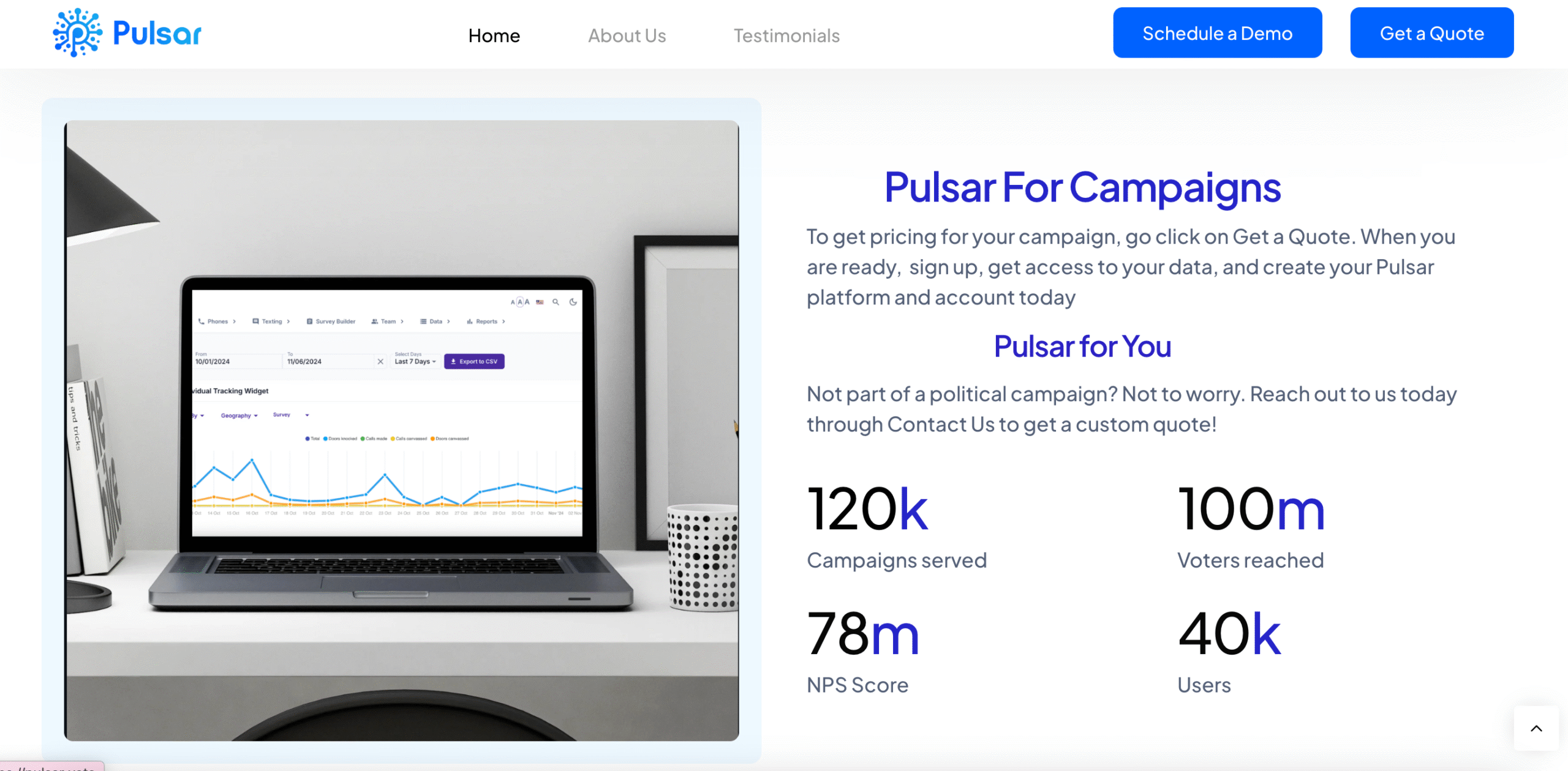
Pulsar has powered more than 120,000 campaigns and helped reach over 100 million voters. From local races to national contests, campaign teams trust it to keep voter contact organized and reliable.
Keep Campaign Data Organized
Pulsar makes it easy to see your outreach results. You can check delivery rates, response levels, and engagement trends in real time. This helps you adjust messages based on how voters actually respond.
If one type of text earns better results, you can update your next round immediately. You send fewer messages but reach more people who are ready to engage.
Make Every Message Count With Pulsar
Your team works hard to reach voters. Pulsar keeps every part of that effort in sync. You can plan, send, and track outreach in one platform. That focus helps you connect with more voters in less time.
Get a quote or schedule a demo to see how Pulsar turns complex outreach into a coordinated effort!
FAQs About Political SMS Marketing
What is political SMS marketing?
Political SMS marketing is a method campaigns use to communicate directly with voters through text messages. Campaigns send updates, event details, and donation requests to keep supporters informed.
It’s one of the most effective communication tools for connecting with voters throughout an election.
Is political texting legal?
Yes, political texting is legal when campaigns follow the right rules. The Telephone Consumer Protection Act requires voter consent before sending messages. Each text should include a way to opt out, such as replying “STOP.”
How can political text messages help a campaign?
Political text messages help campaigns stay personal and responsive. For example, messages that remind supporters about upcoming events or early voting can increase participation.
Looking at political campaign examples that used texting successfully can help new campaigns understand what works best for their audience.
What should a political text message include?
A strong text is short, clear, and direct. Include your campaign name, purpose, and a simple call to action. You can add links to donation pages or voter information sites.
Review sample messages from past campaigns to guide your tone and structure. For questions or support, provide a toll-free number so voters can contact your campaign’s service team.